


LEESON Brakemotors, Three Phase, TEFC, C Face Less Base
Leeson brake motors offer braking as a safety measure when power is cut abruptly. They are used on conveyors, machine tools, speed reducers, door operators and hoists which require a quick stop.
Filter
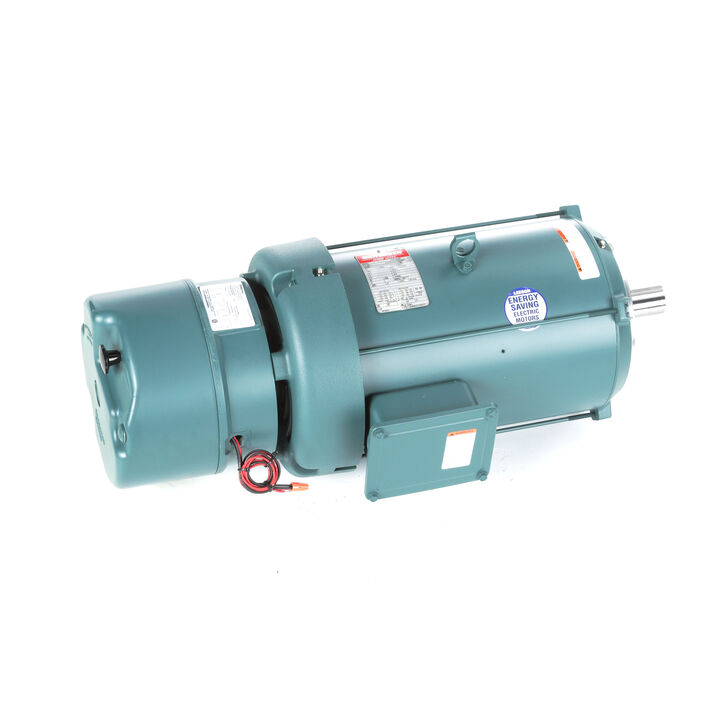 A
A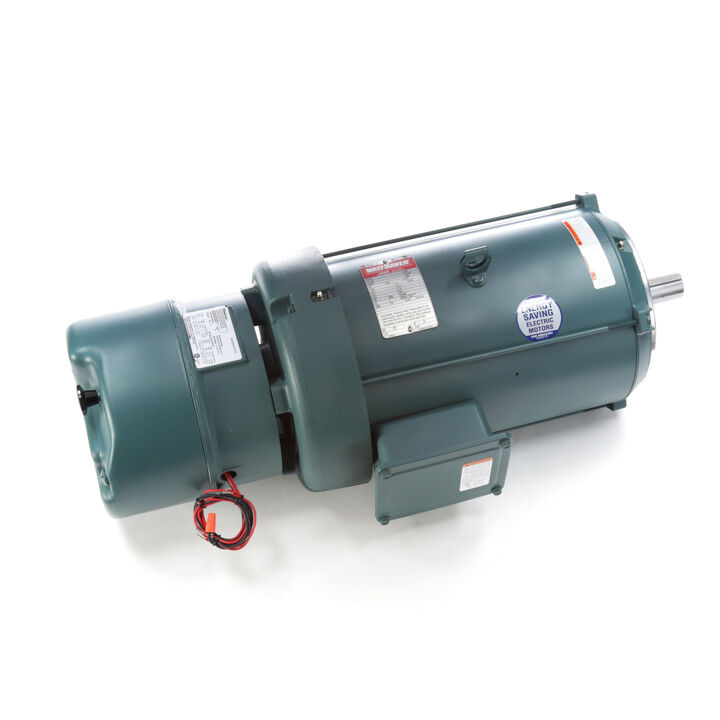 B
B| Style | Model | Hp | Full Load Amps | Power | Frame | Power Factor | Design | Kw | Frame Type | Price | |
|---|---|---|---|---|---|---|---|---|---|---|---|
| A | 141308.00 | 7 1/2 hp | 21.4/10.7A | 5.6 kW | 213TC | 71.7 | A, H | 5.6 kW | 213TC | €3,768.34 | |
| B | 141309.00 | 10 hp | 28.8-26.8/13.4A | 7.5 kW | 215TC | 77 | B, H | 7.5 kW | 215TC | €4,773.39 |
Working Mechanism
- Brake motors use an electromagnetic field for powering and braking the motor.
- They function by pushing a magnetic pole rotor through the applied current.
- The poles of the stator (surrounding the rotor) apply force to turn the shaft.
- When static AC or DC current is injected into the unit, the poles of the stator become static and stop the rotor.
Features
- Leeson brake motors come with a TEFC / TENV enclosure to ensure protection from dust, water and air-borne contaminants.
- They have a drive-end, C-face endshield with less base for quick installation.
- These NEMA Design A, B or C units offer premium Class B / F insulation for temperature control.
- The brakes of these models are fail-safe and spring-set, owing to dual voltage brake coils.
- They feature durable steel frame construction for structural rigidity and Polyrex EM lubrication to resist oil & water leakage at temperatures up to 40 degrees Celsius.
- These triple-phase units have a power-off manual release for user convenience in case of power failure. The load is automatically stopped when power is cut off.
- They offer continuous duty operation at speeds up to 1800 rpm.
- These IP43 motors produce torque up to 10 hp at 50 / 60Hz power supply.
Standards and Approvals
- NEMA
- IEC
Frequently Asked Questions
What is the difference between TENV and TEFC motors?
Totally enclosed non-ventilated (TENV) motors are designed without air openings and are ideal for applications where frequent sanitising or cleaning is required. TEFC (totally enclosed fan-cooled) motors come with an external fan to circulate outside air to the motor.
What is the difference between single, double and triple-phase motors?
- Single-phase motor: Electricity flows through a single conductor.
- Double-phase motor: Electricity flows through 4-wire conductors (2 for each phase).
- Triple-phase motor: Electricity flows through 3 separate conductors.
What do Class B and F insulation mean?
These motors have Class B or F insulation for temperature control. Class B insulated motors can handle temperatures up to 130 degrees C and Class F motors can withstand a maximum temperature of 105 degrees C.
We are here to help!
Looking for a part not listed here?
Explore More
- KEYSHAFT
- Bore Polishers
- Epoxy
- Inspection Service Doors
- Multi-Gas Detectors
- Hydronic Unit Heater Accessories
- DESTACO 301, 311 Series Pull Action Latch Clamps
- HELICOIL Spiral Flute Taps, Bottoming, UNF, 2B
- NORTH BY HONEYWELL Northflex Light Task Plus 3 General Purpose Gloves
- BOSCH Hammer Steel 1 1/8 Hex
- VESTIL E-MT Series Low Profile Manual Trollies
- DIXON AG Series Hydraulic Couplings
- NIBCO 6603 Series Female Adapter Couplings, S x FPT, Kynar Natural PVDF Schedule 80
- SLOAN Sloan RESS-U Exposed Sensor Urinal Retrofit Flushometers