


LEESON 50 Hertz Motors, Single Phase, TEFC, Rigid Base
Leeson 50 Hz motors are single-phase units ideal for medium-to-high torque requirements in conveyor, auger drive, ventilation, shop tool and pump applications. They utilise a capacitor to offer extra power during startup for maximum torque.
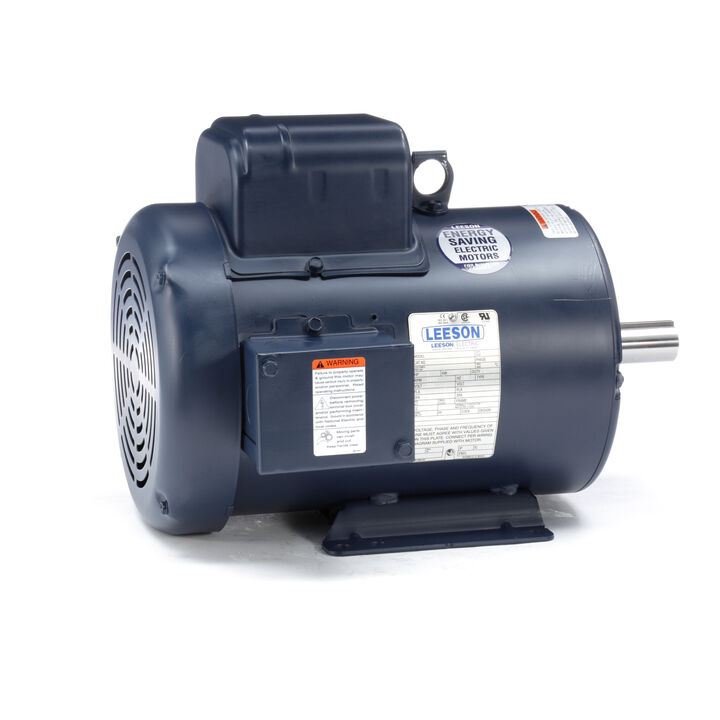 A
A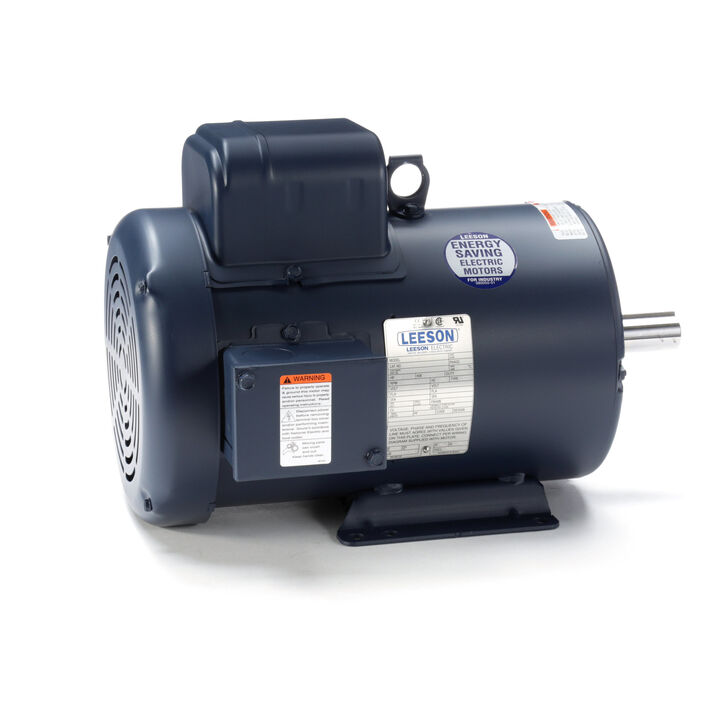 B
B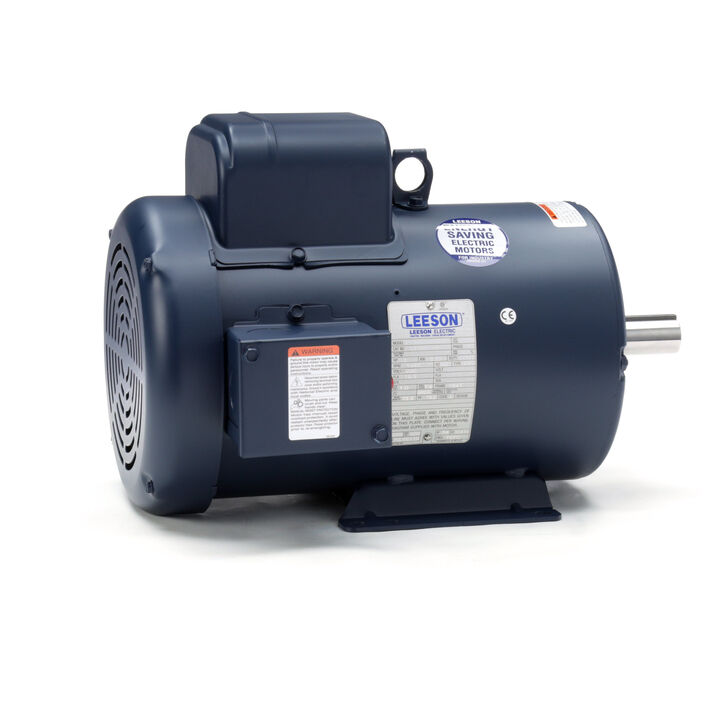 C
C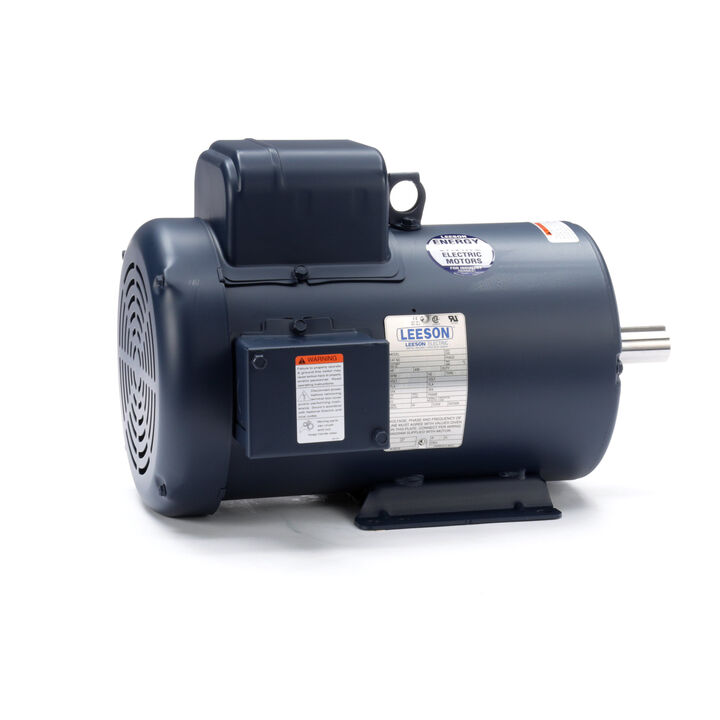 D
D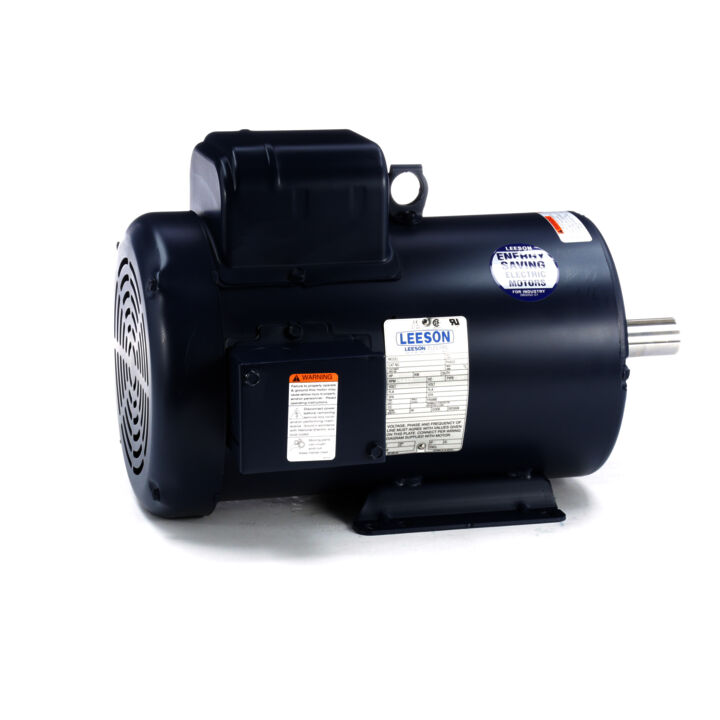 E
E| Style | Model | Hp | Full Load Amps | Nameplate Speed | Frame Type | Frame Material | Speed | Full Load Efficiency | Thermal Protection | Price | |
|---|---|---|---|---|---|---|---|---|---|---|---|
| A | 131556.00 | 2 hp | 11.2A | 1440 RPM | 182T | Rolled Steel | 1440 RPM | 72% | None | €2,077.93 | |
| B | 131557.00 | 3 hp | 15.9A | 1440 RPM | 184T | Rolled Steel | 1440 RPM | 79% | None | €1,910.04 | |
| C | 131601.00 | 3 hp | 15.9A | 1440 RPM | 184T | Rolled Steel | 1440 RPM | 75.5% | Manual | €1,878.72 | |
| D | 131638.00 | 5 hp | 20.5A | 2875 RPM | 184T | Rolled Steel | 2875 RPM | 81.5% | None | €2,234.09 | |
| E | 131578.00 | 5 hp | 21A | 1440 RPM | 184T | Steel | 1500 RPM | 82.5% | None | €4,302.19 |
Working Mechanism
- Electric motors convert electrical energy into mechanical energy for generating motion.
- Force is produced within the motor through the interaction between a winding alternating (AC) or direct (DC) current and the magnetic field.
Features
- Leeson 50 Hz motors are equipped with a TEFC enclosure to permit the cooling air to flow through the motor, thereby preventing overheating.
- These single-phase models offer clockwise or counterclockwise rotational shafts with a keyed design.
- They come with high-quality ball bearings to deliver speeds up to 2875 rpm and a rigid base for easy mounting.
- These units are designed to produce torque up to 5 hp on a 50 Hz power supply.
- They are available in Class B and F insulation types to withstand temperatures up to 40 degrees C.
Frequently Asked Questions
Do these motors prevent overloads?
Yes, these Leeson motors have a manual reset thermal protector to prevent overloads.
What is the difference between single, double and triple-phase motors?
- Single-phase motor: Current flows through a single conductor.
- Double-phase motor: Current flows through 4-wire conductors (2 for each phase).
- Triple-phase motor: Current flows through 3 separate conductors.
What does class B and F insulation mean?
These motors have Class B or F insulation for temperature control. The Class B insulated motors can handle temperatures up to 130 degrees C and Class F can withstand a maximum temperature of 105 degrees C.
What is the difference between TEBC and TEFC motors?
Totally enclosed blower-cooled (TEBC) motors are virtually identical to TEFC motors with the exception that the motor body is cooled by a separate "blower" positioned on the body rather than by a shaft-mounted fan while the motor is working at a high speed.
We are here to help!
Looking for a part not listed here?
Explore More
- KEYSHAFT
- LEWISBINS
- VALEO GLOVES
- ALEXIS FIRE EQUIPMENT
- WOODEX BEARINGS
- Flaring And Swaging Tools
- Progressive Cavity Pumps
- Lighting Transformers
- Regenerative Blower Mufflers
- Drum Dumper
- DESTACO 247, 267 Series Vertical Hold Down Clamps
- FIRE-DEX Bibbed Fire Hoods
- RUD CHAIN TXP Texolution Point Swivel Hoist Rings, Metric Thread
- GLOBE SCIENTIFIC Screwcaps without O-Ring, for Sample Tubes
- ANVIL AS520DS Series Dakota Struts
- POP Domed
- APPROVED VENDOR 3/8"-16 Knurled Socket Hex Stainless Steel Shoulder Screws
- BROWNING Standard Duty Top Mount Take Up Frames
- SANDUSKY LEE Stationary Combination Cabinets
- 3M Roto Peen Flap Assemblies