


EATON D2RF Series General-Purpose Relays
Eaton D2RF Series general-purpose relays are ideal for switching AC or DC loads in industrial automation, control systems and power distribution. They provide a high level of electrical isolation, as the relay contacts are physically separated from the coil, thus creating a barrier between the control & the load circuit. They also feature a flag indicator, a locking pushbutton an...d socket-type mounting for user convenience. Read more
Filter
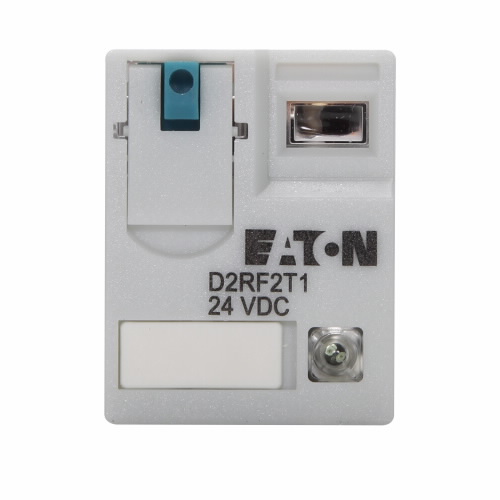 A
A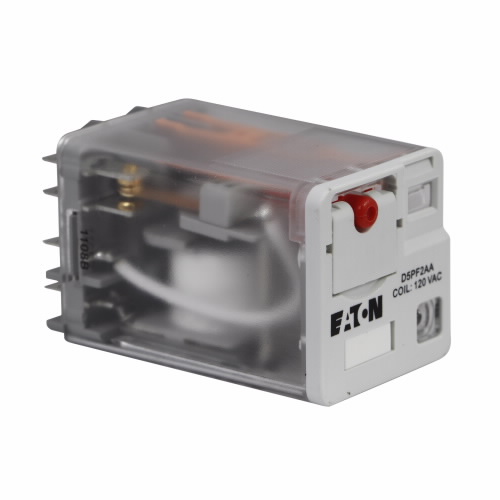 B
B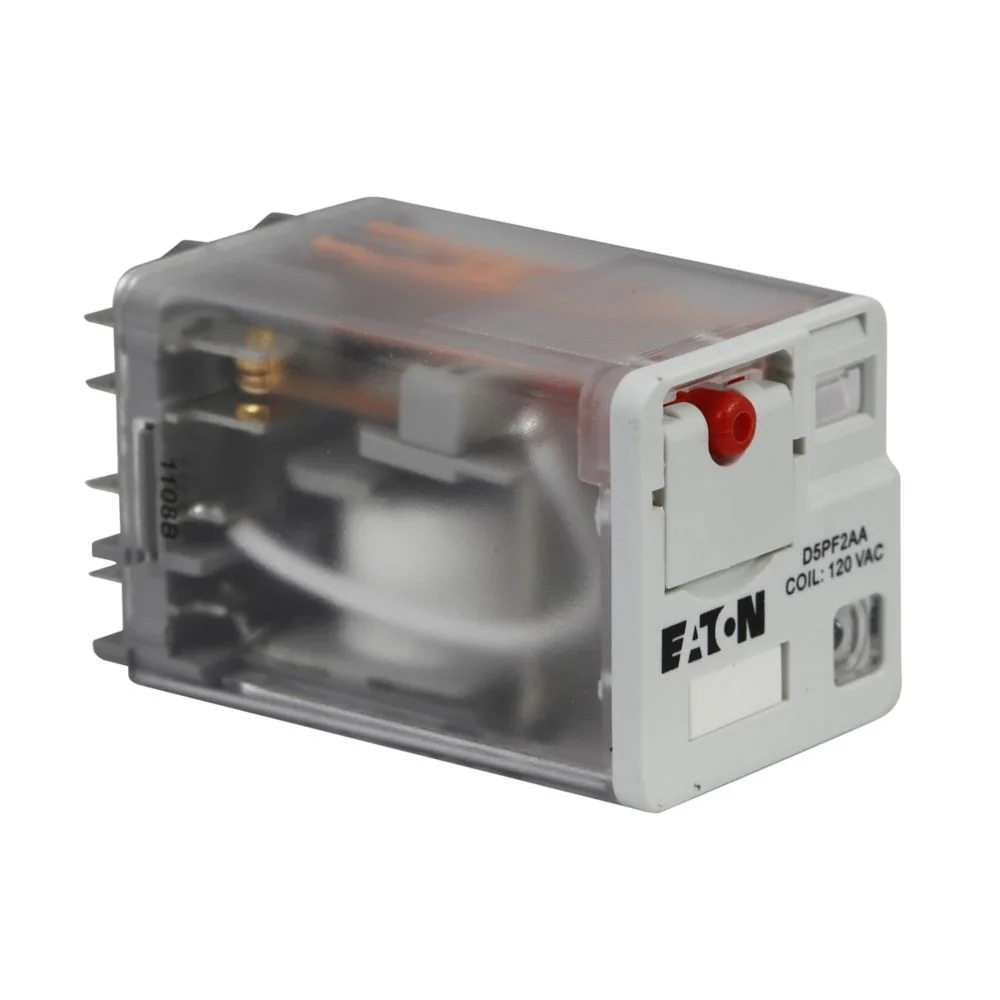 C
C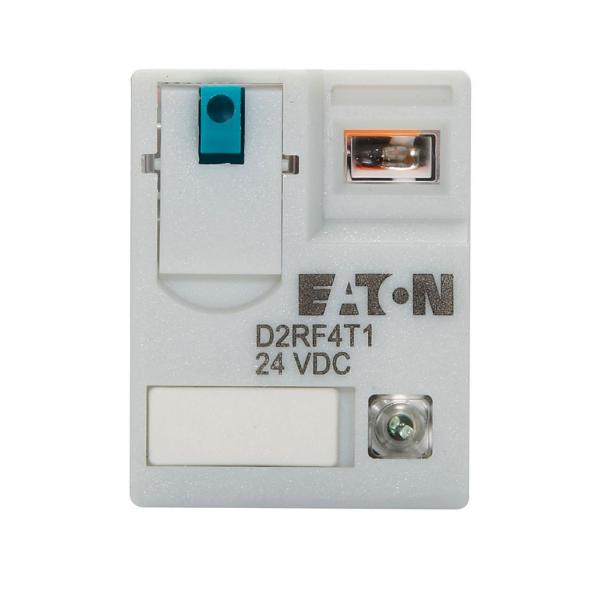 D
D| Style | Model | Product Width | Product Height | Type | Product Name | Contact Form | Price | |
|---|---|---|---|---|---|---|---|---|
| A | D2RF2T1 | - | - | - | - | - | €53.70 | |
| B | D2RF4A1 | - | - | - | - | - | €34.63 | |
| C | D2RF4A | - | - | - | - | 4 PDT | €55.88 | |
| C | D2RF2T | 1 1/2" | 1" | General-purpose Relay | Eaton General-purpose Relay | - | €54.45 | |
| B | D2RF4R1 | 1 1/4" | 0.7" | General-purpose Relay | Eaton General-purpose Relay | - | €34.63 | |
| B | D2RF2A1 | 1 1/5" | 1" | General-purpose Relay | Eaton General-purpose Relay | - | €32.85 | |
| C | D2RF4T | 1 1/5" | 1" | General-purpose Relay | Eaton General-purpose Relay | - | €42.56 | |
| B | D2RF2A | 1.3" | 1.1" | General-purpose Relay | Eaton General-purpose Relay | - | €40.90 | |
| C | D2RF4W1 | 1.3" | 1" | General-purpose Relay | Eaton General-purpose Relay | - | €34.63 | |
| B | D2RF4B | 2 4/5" | 0.7" | General-purpose Relay | Eaton General-purpose Relay | - | €40.32 | |
| D | D2RF4T1 | 2" | 1" | General-purpose Relay | Eaton General-purpose Relay | - | €55.74 | |
| B | D2RF2R1 | 2" | 1 1/2" | General-purpose Relay | Eaton General-purpose Relay | - | €32.85 |
Working Mechanism
- These switching devices consist of a coil that generates a magnetic field when current flows through it.
- The magnetic field helps to attract the armature that eventually closes the contacts to complete the electrical circuit.
- As the current flow stops, the magnetic field decreases, causing the armature to return to its original position.
- This causes the contacts to open again and break the circuit.
Frequently Asked Questions
What is a purpose of a flag indicator?
Flag indicators consist of a flag or a marker attached to the shaft or a pole to provide a clear and visible indication of the relay, such as whether it is energised (activated) or de-energised (deactivated).
How to remove the coil in general-purpose relays?
- Ensure the power to the control panel is disconnected.
- Remove the cover of the panel or simply unplug the relay from the socket.
- Once the relay is removed, locate the coil. It is normally located at the bottom of the relay and is cylindrical or rectangular in shape.
- Carefully disconnect the wires from the relay by either releasing the clips that hold them securely or simply pulling them out.
- Remove the old coil and replace it with a new one of the same specification.
We are here to help!
Looking for a part not listed here?
Explore More
- KEYSHAFT
- TRIM LOK INC
- WESTAFLEX
- AIGNER LABEL HOLDER
- STEGO
- Internal Rotary Broaches
- PVC Pipe Fittings
- Truck Box and Jobsite Box Accessories
- Motorised Dampers
- Panel Disconnect Switches
- LOC-LINE End Caps
- CONDOR Knit Gloves, Full Finger, Uncoated, 7 Gauge, White
- PLAST-O-MATIC PS Series Pilot Operated Solenoid Valves, 120V, 60Hz
- ANVIL C210 Series Loop Clutches
- ANVIL AS500 Series Channels, Solid
- BALDWIN FILTERS Fuel/Water Separator Spin-on with Open Port
- ANVIL Tank Nipples
- SPEARS VALVES PVC 125 PSI PIP Fabricated Fitting 30 Deg. Elbows, Socket x Socket
- APPROVED VENDOR M14 x 2 Fully Threaded Ultra-Low Hex Cylindrical Alloy Steel Socket Head Cap Screws
- BALDOR / DODGE Split Tire, 30HSB, Elastomeric Couplings