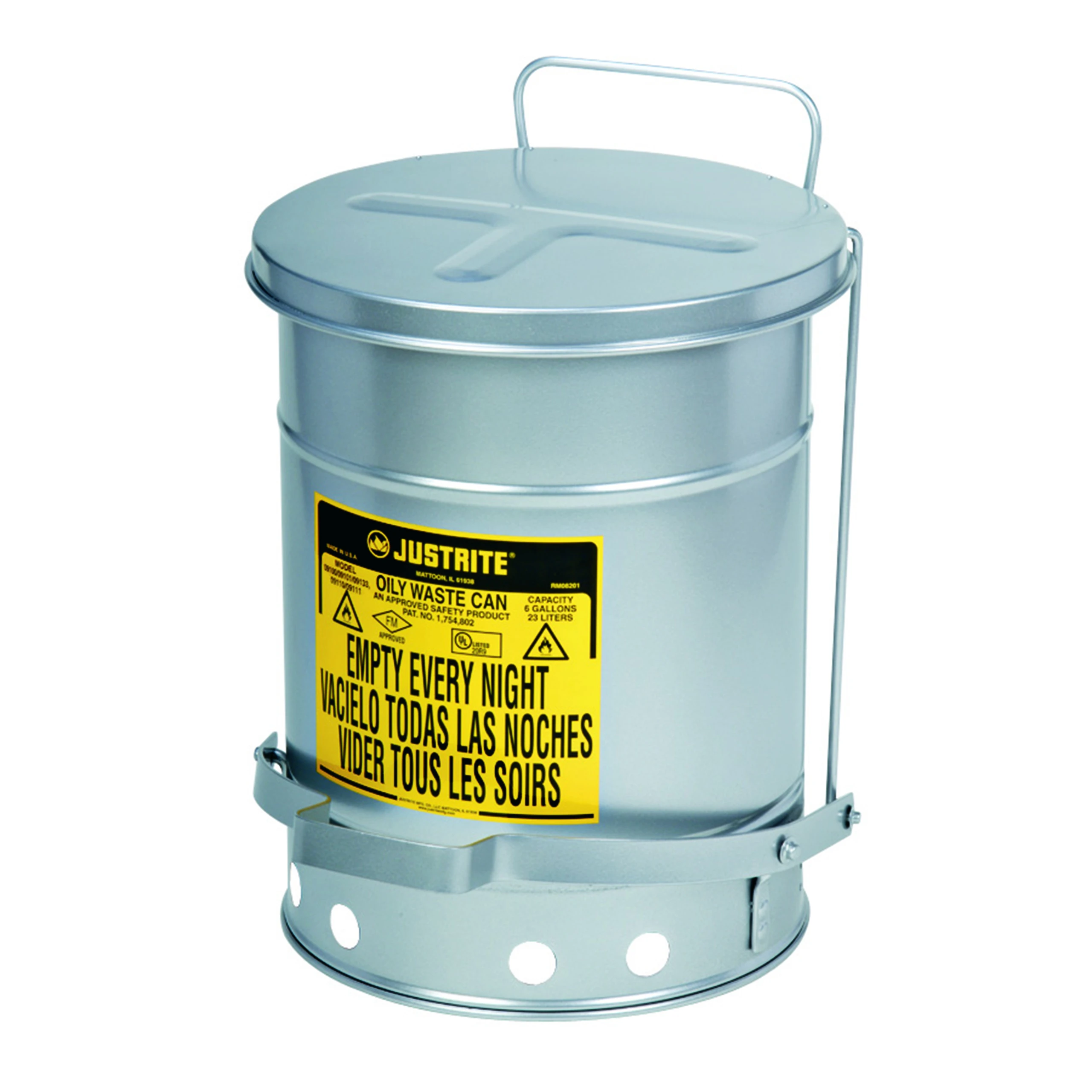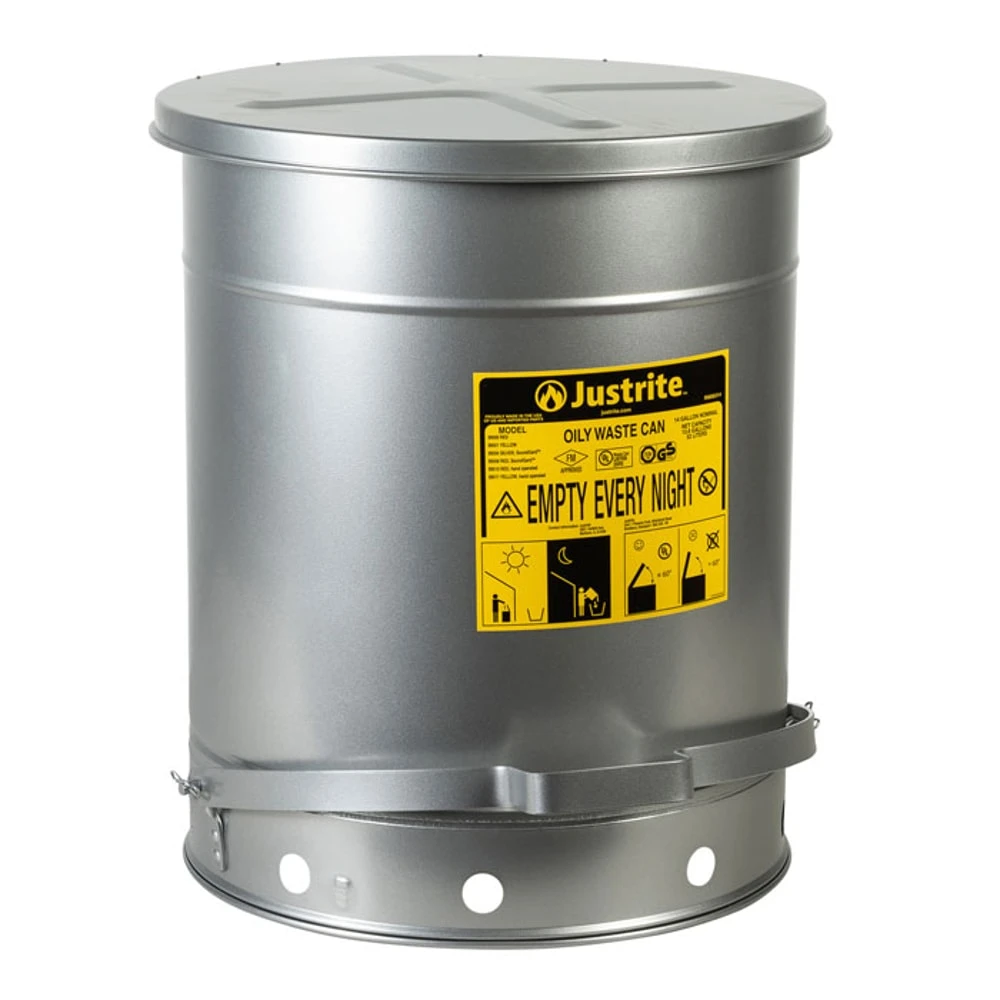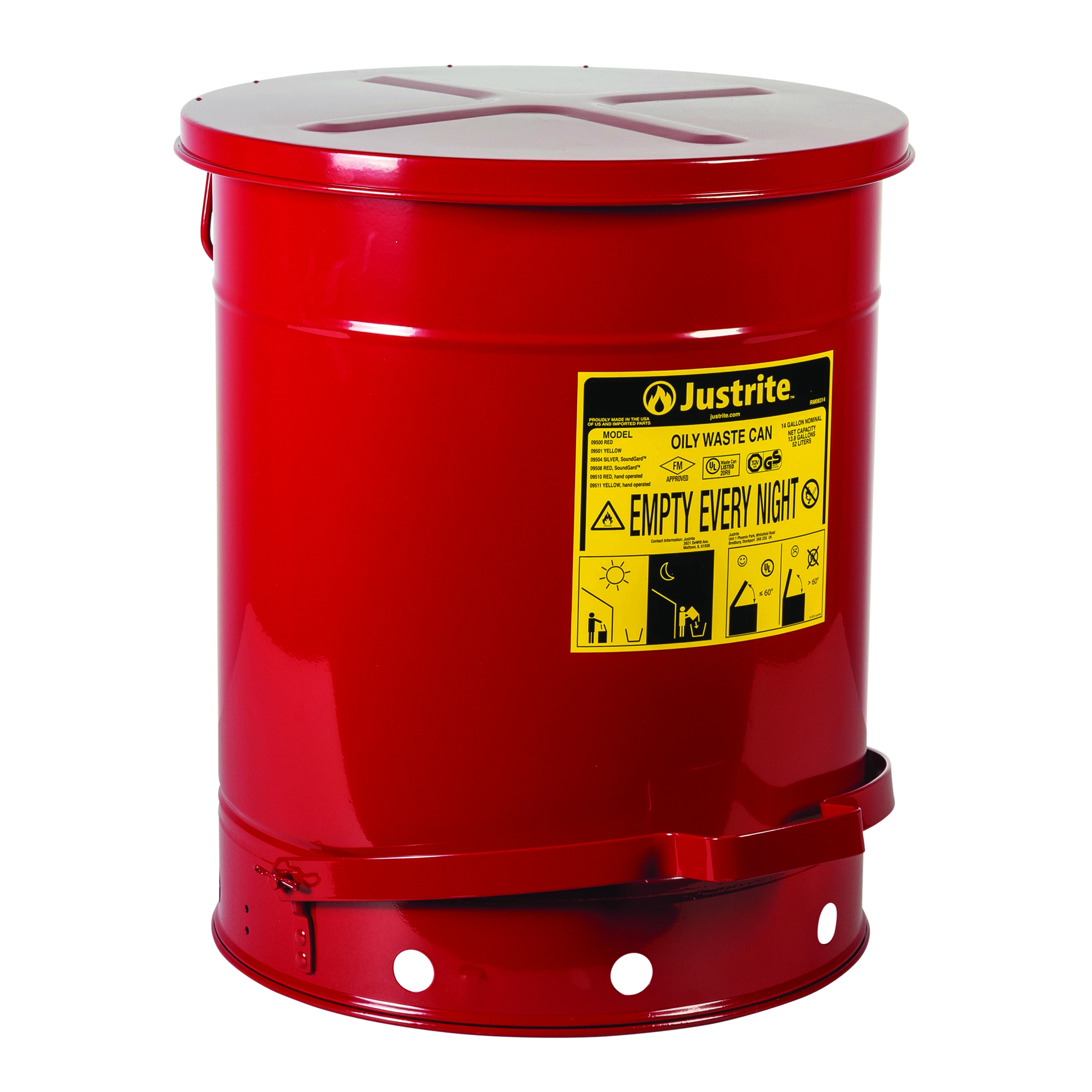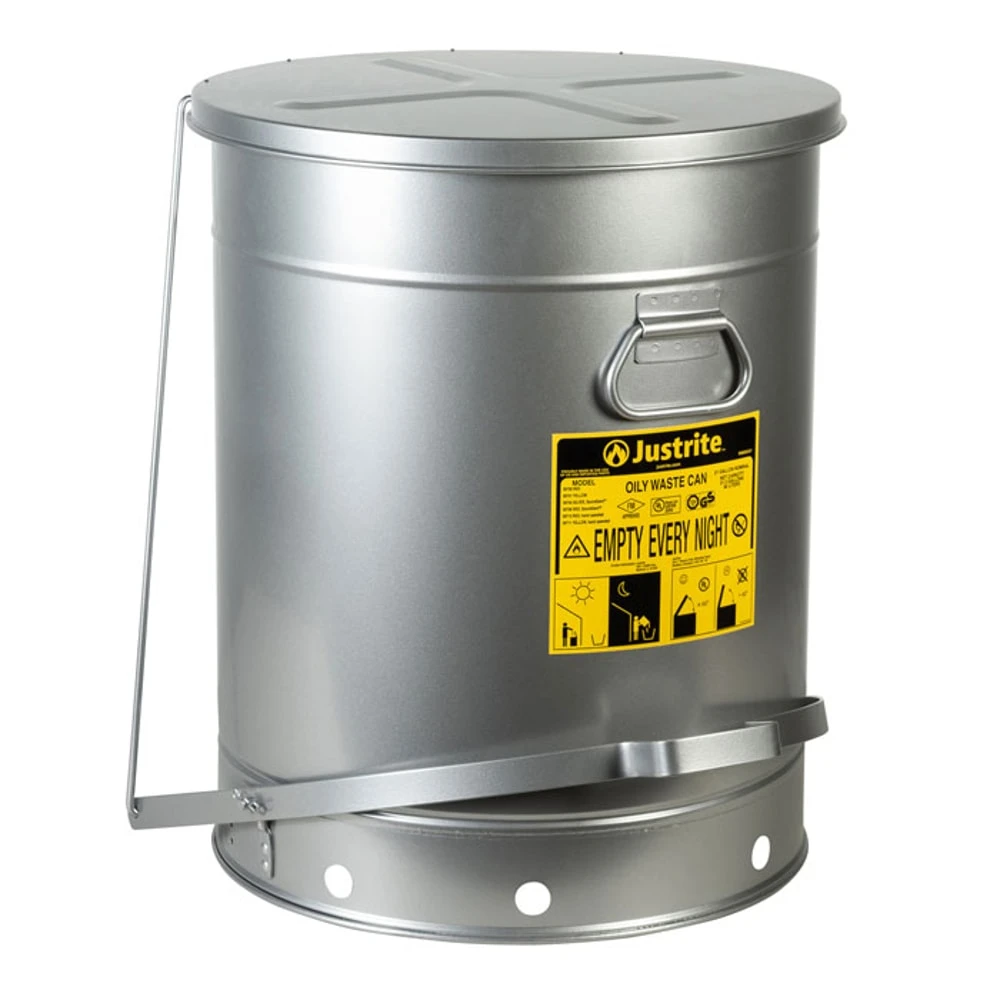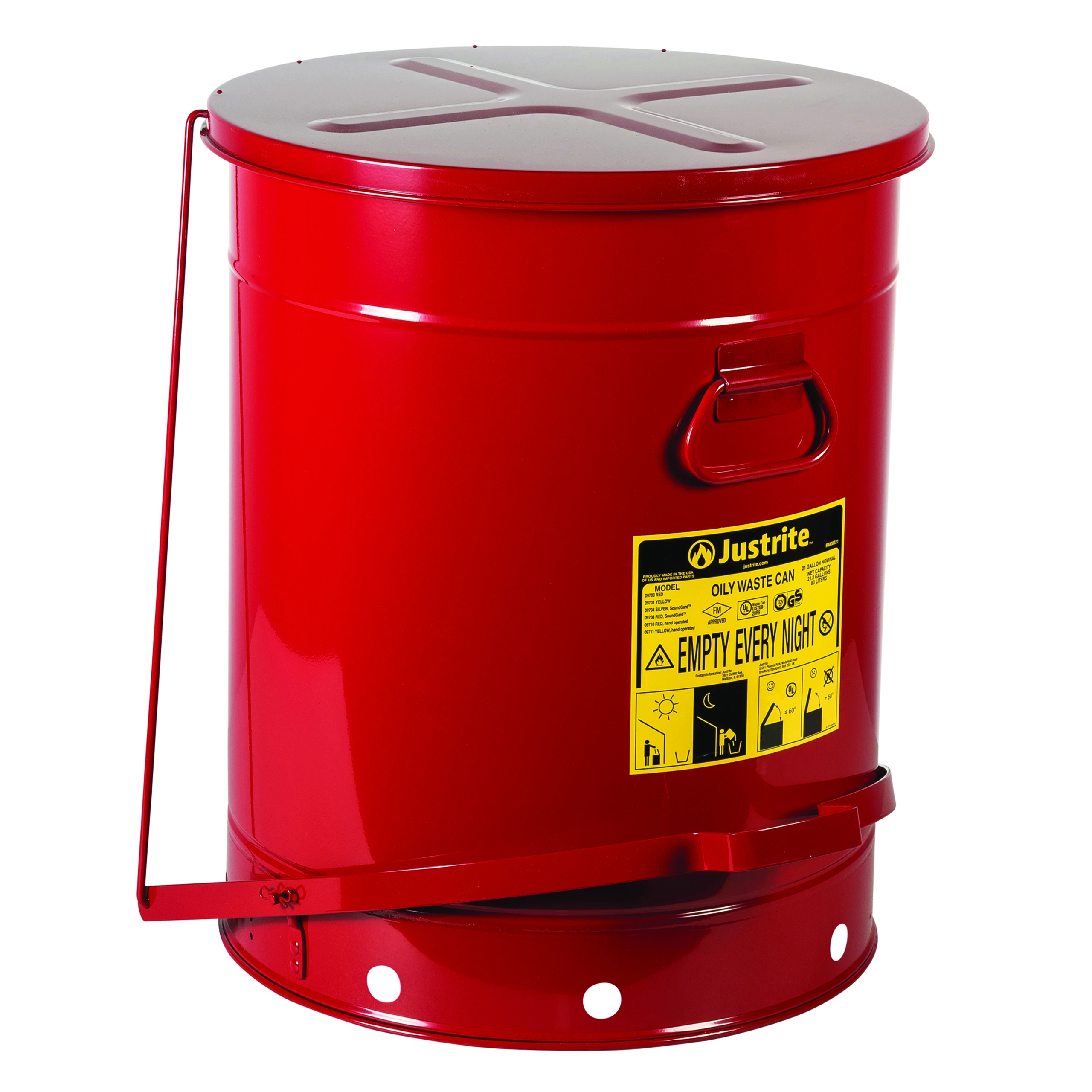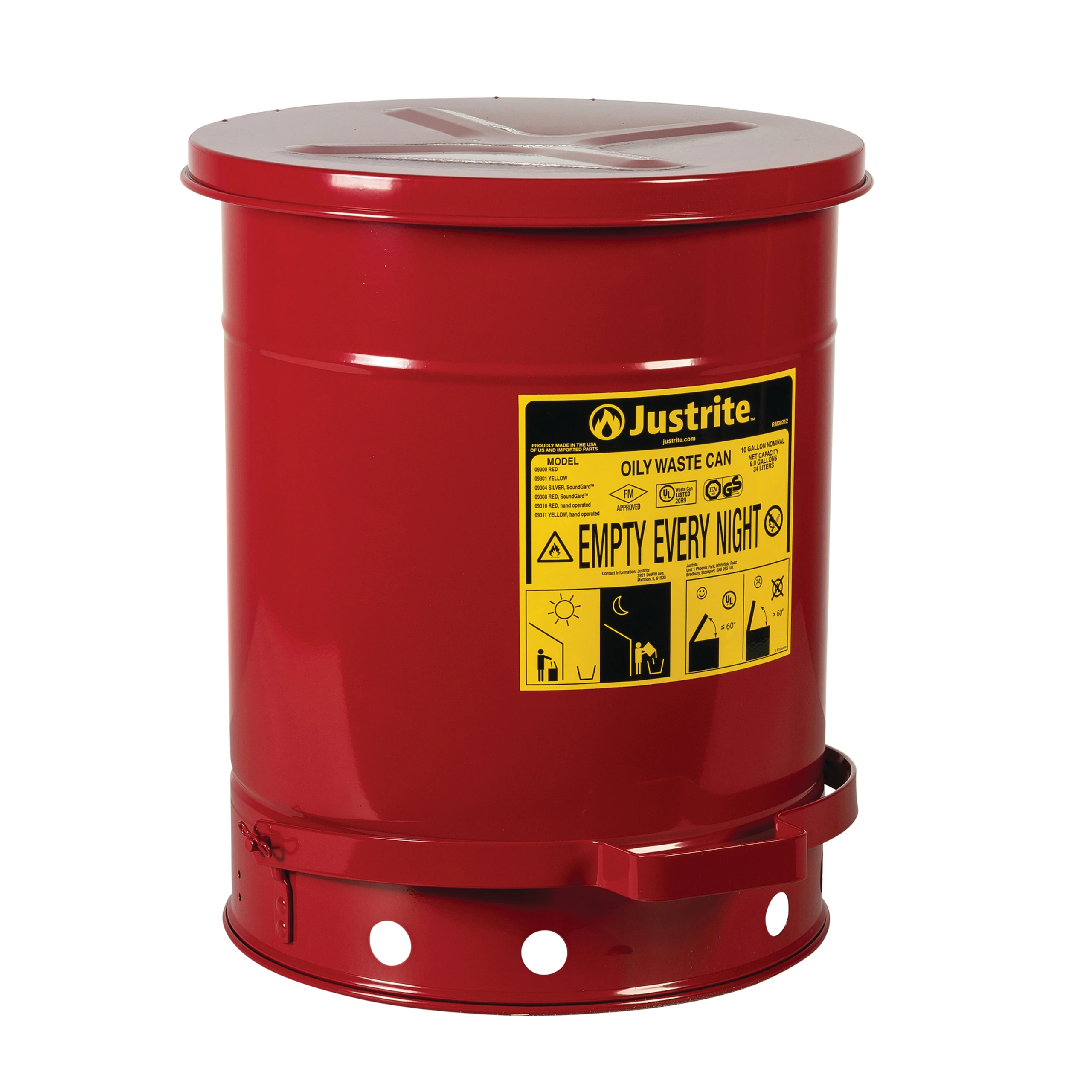
JUSTRITE Oily Waste Cans
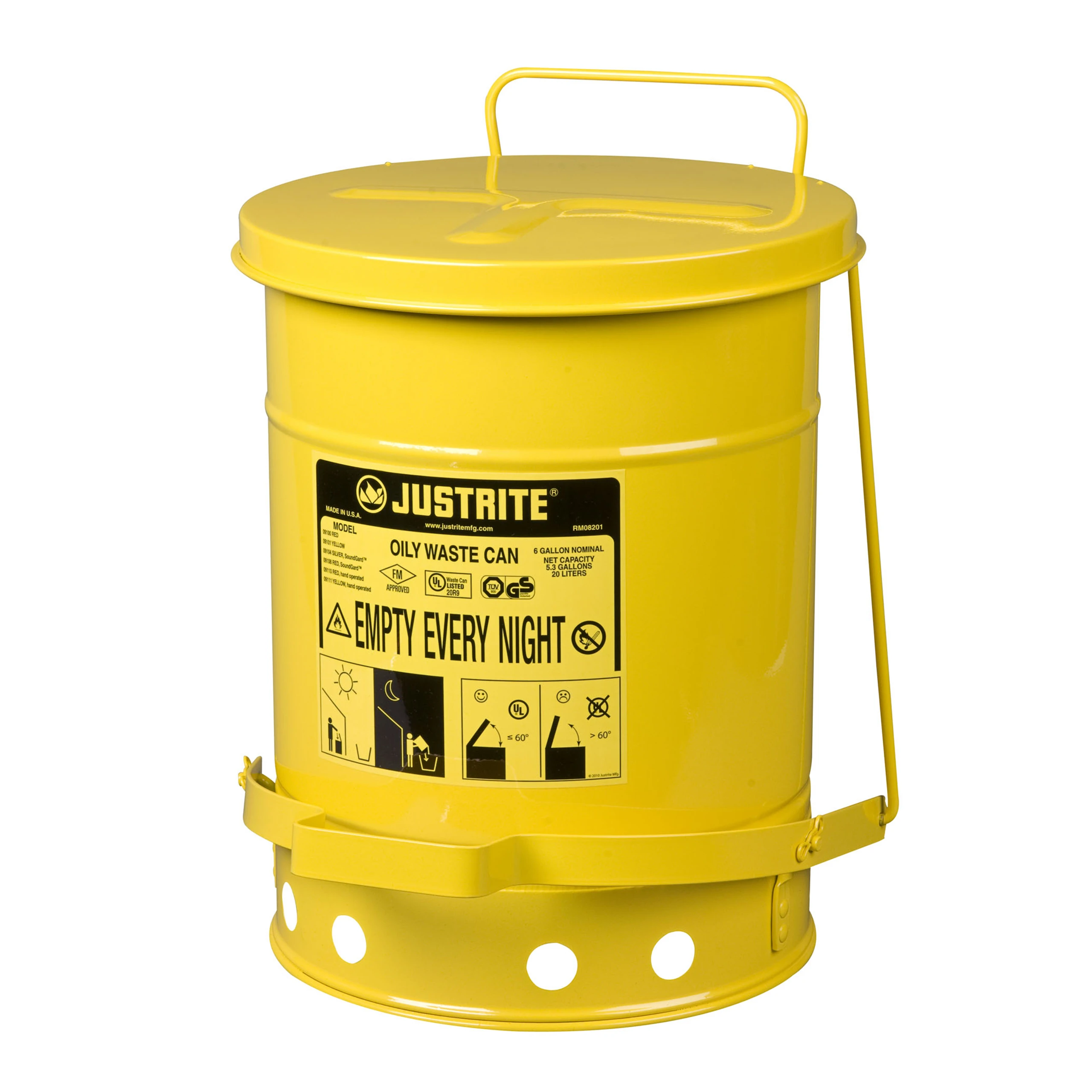
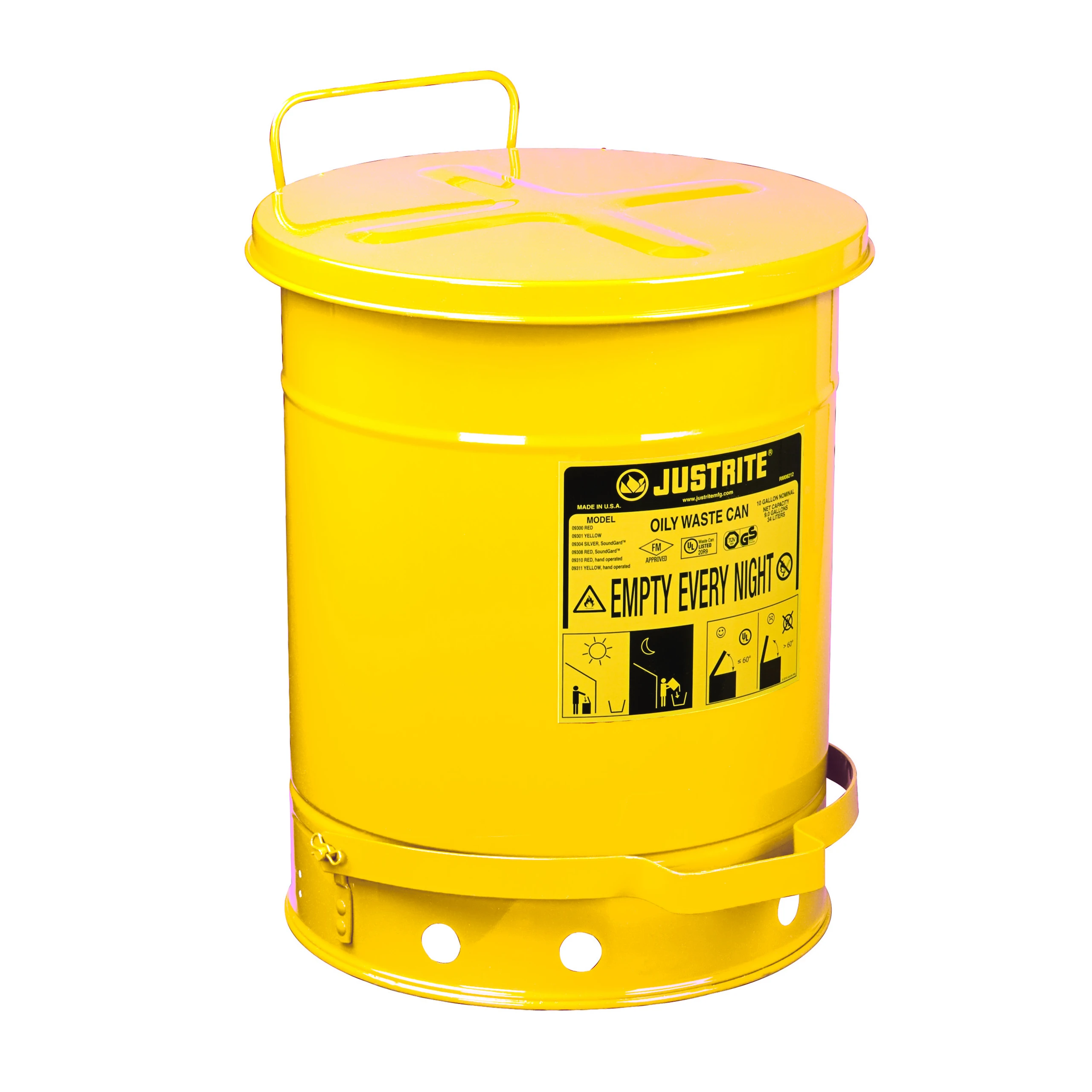
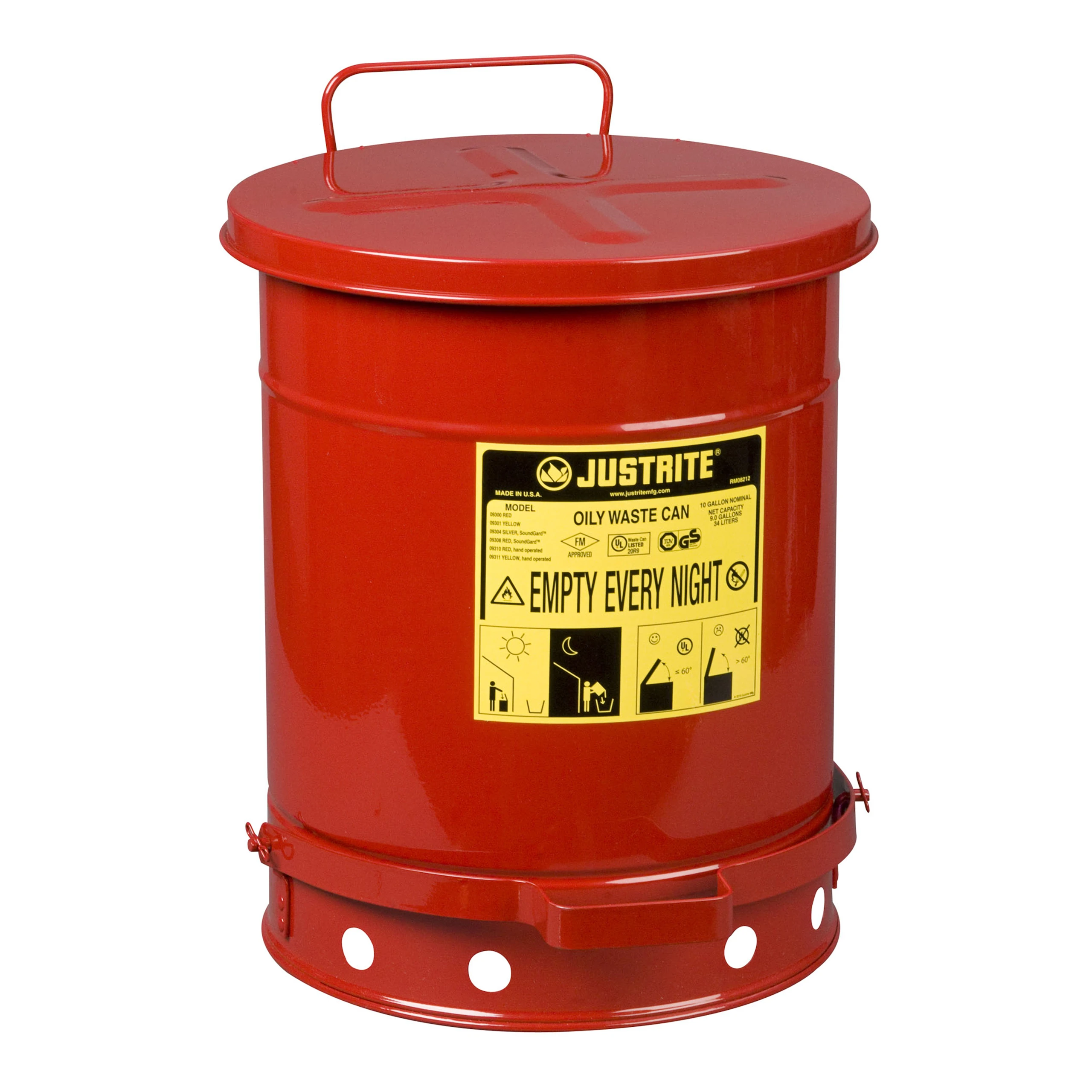
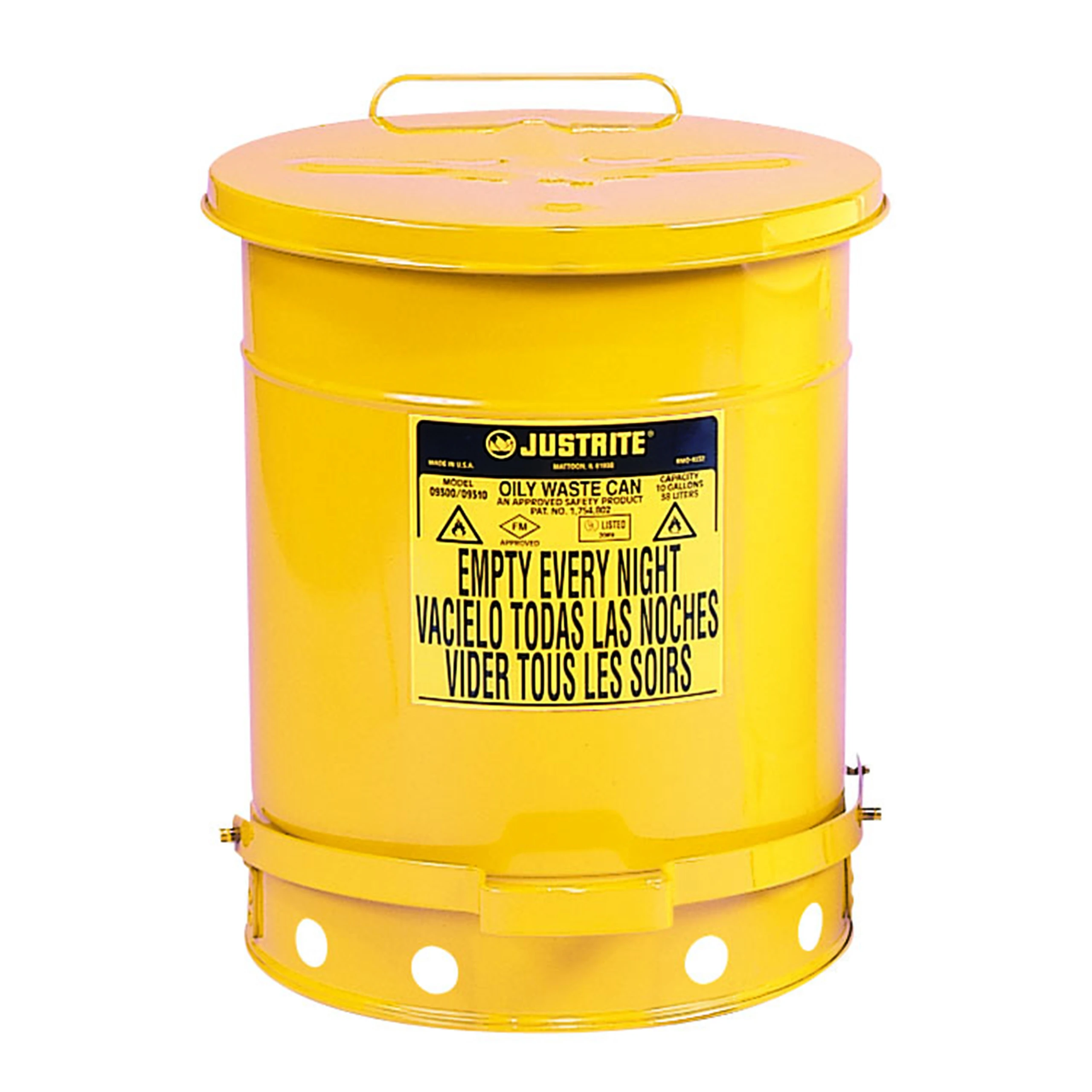
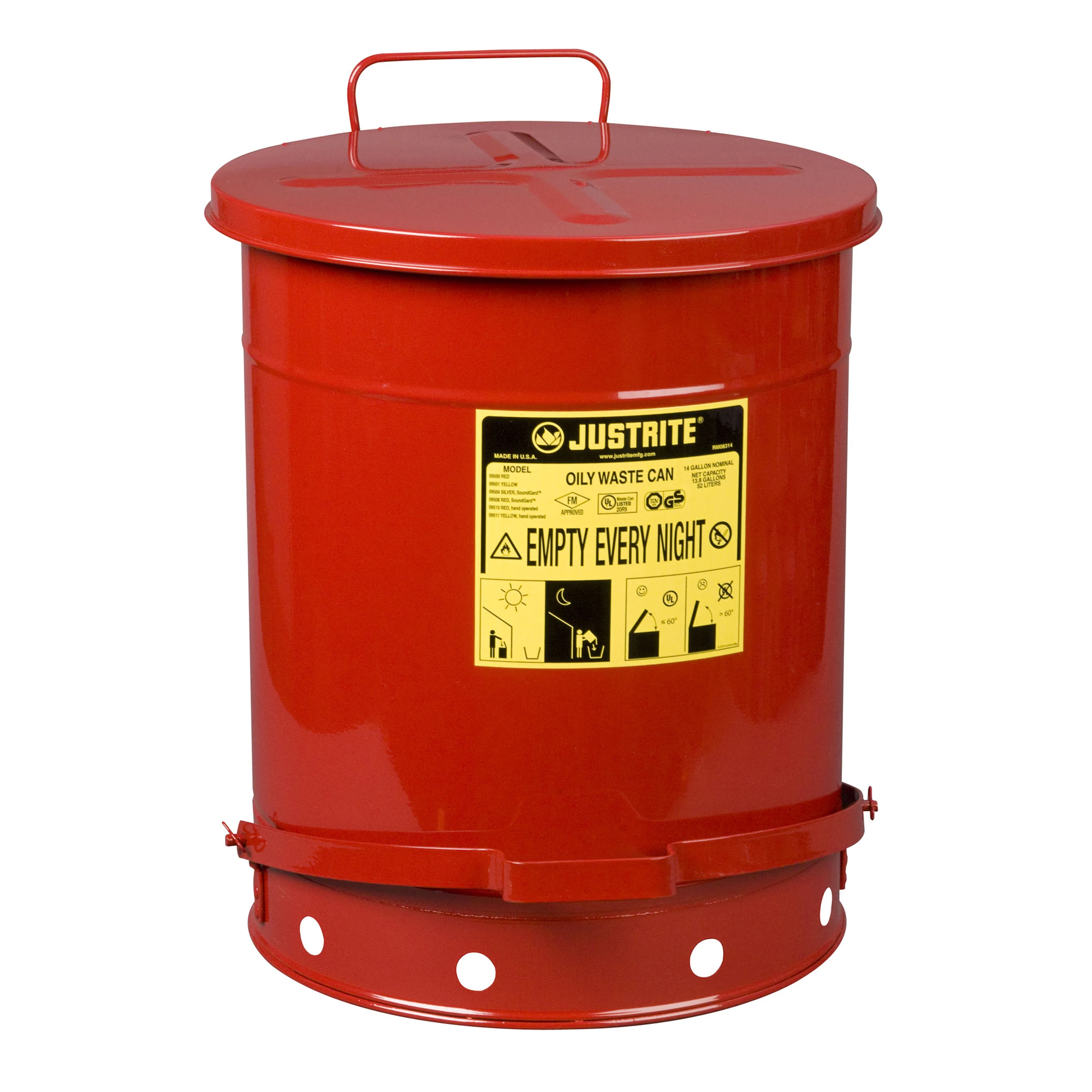
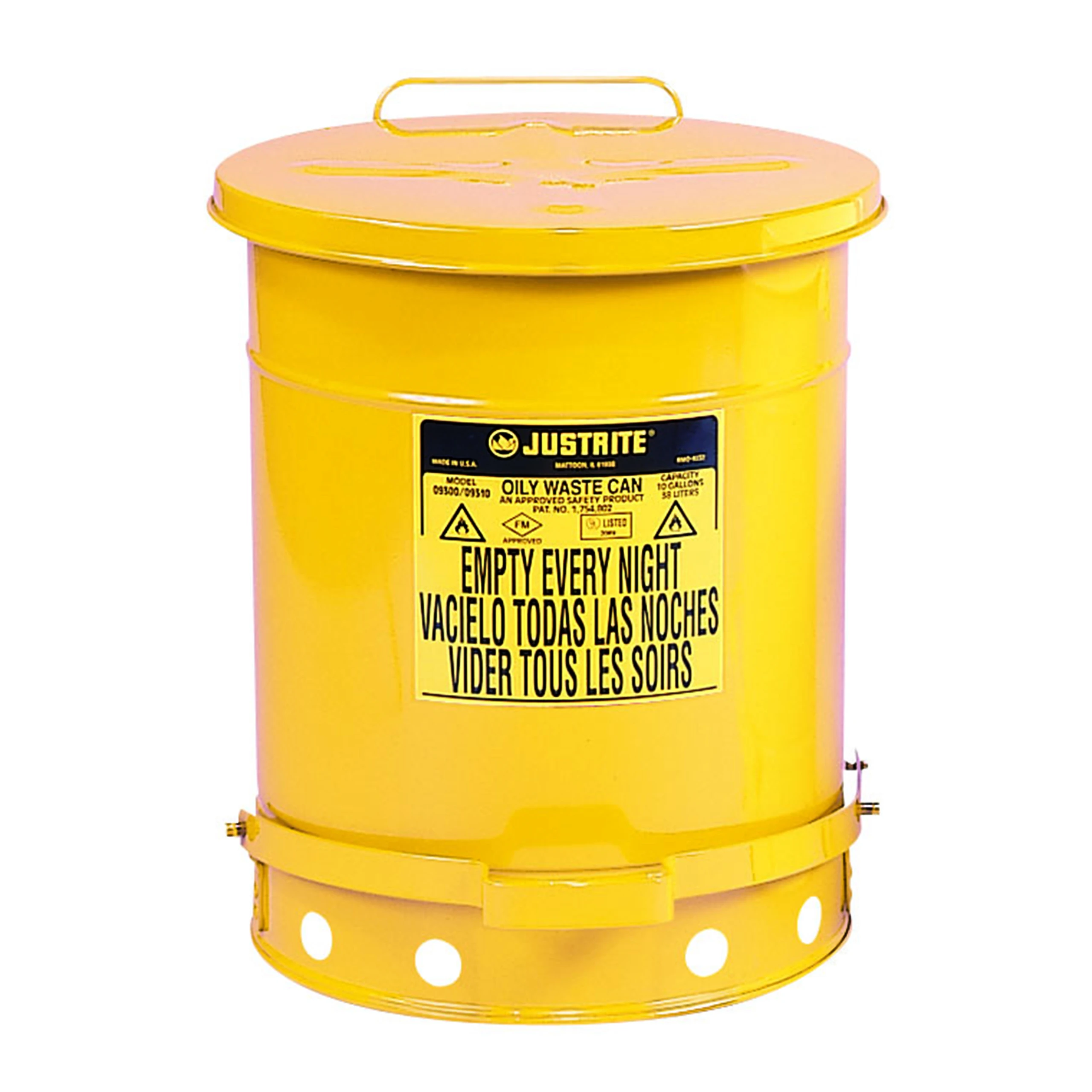
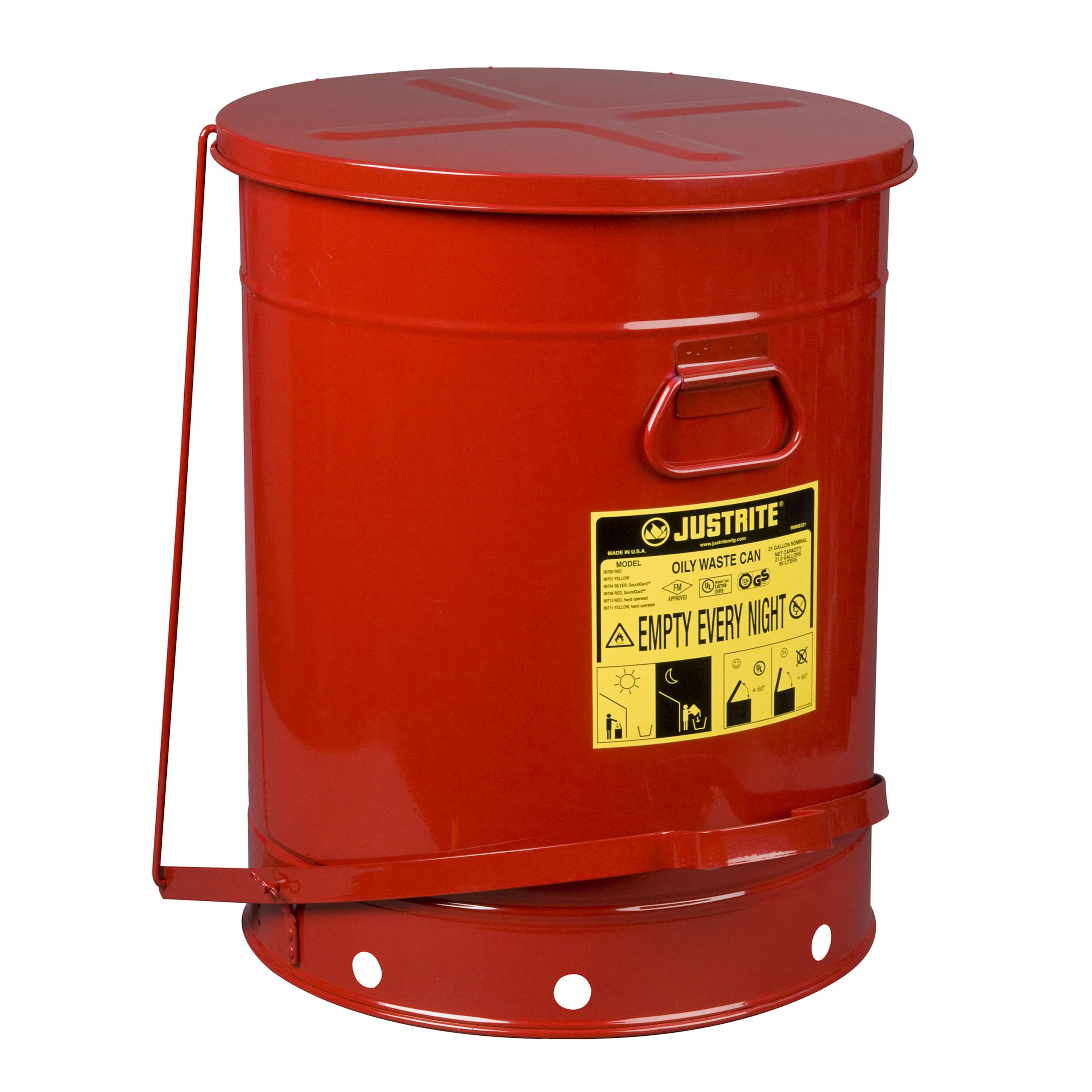
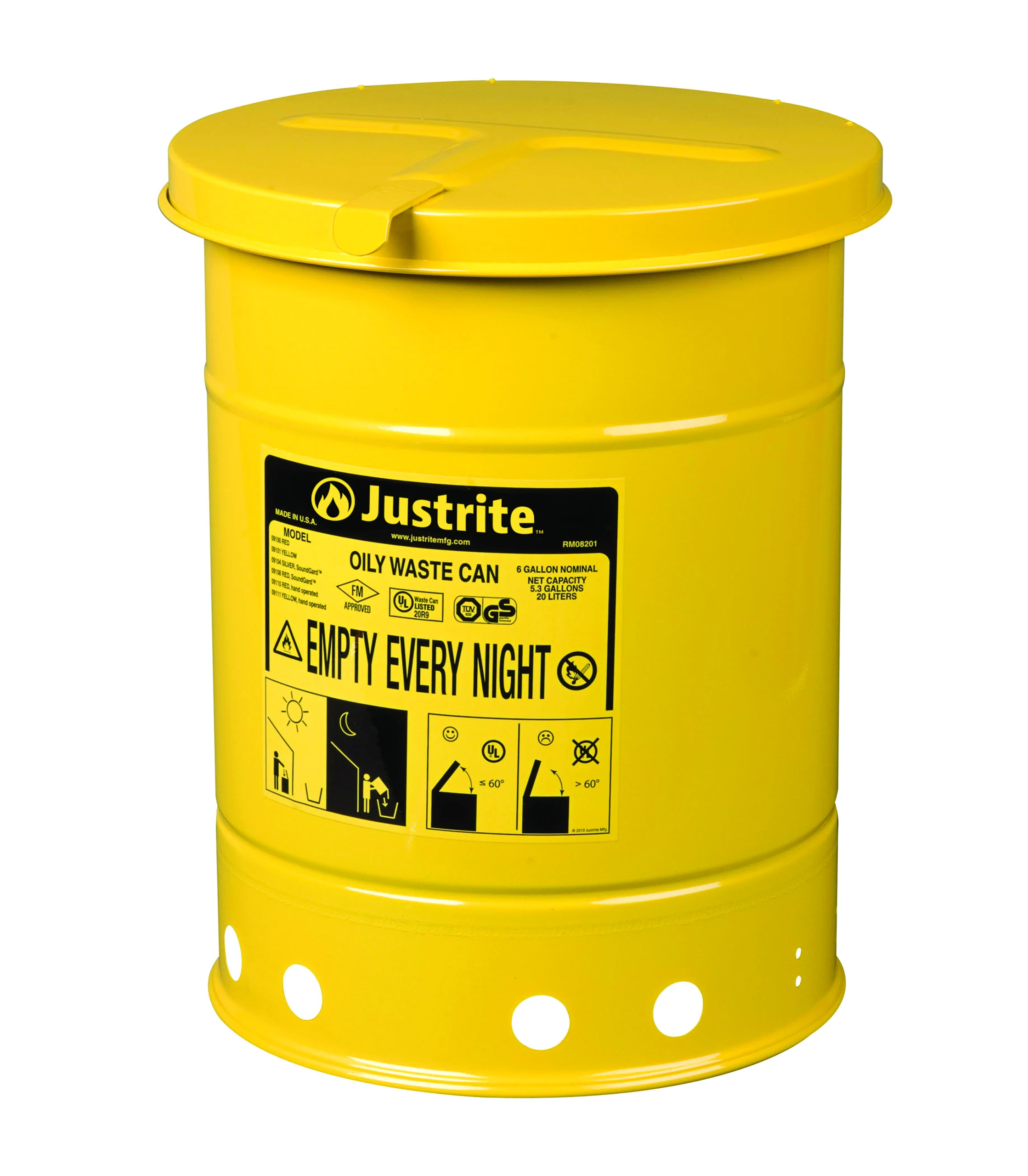
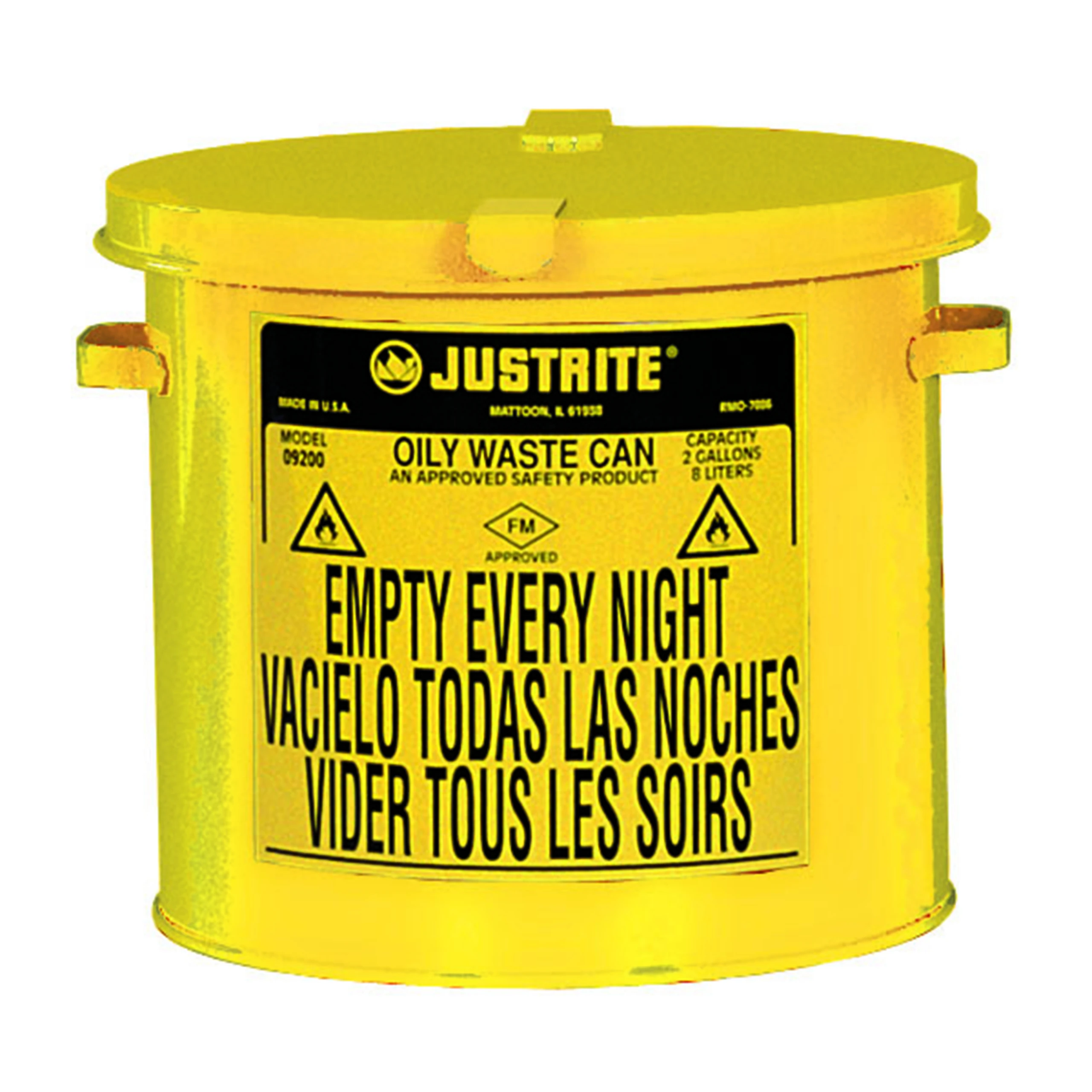
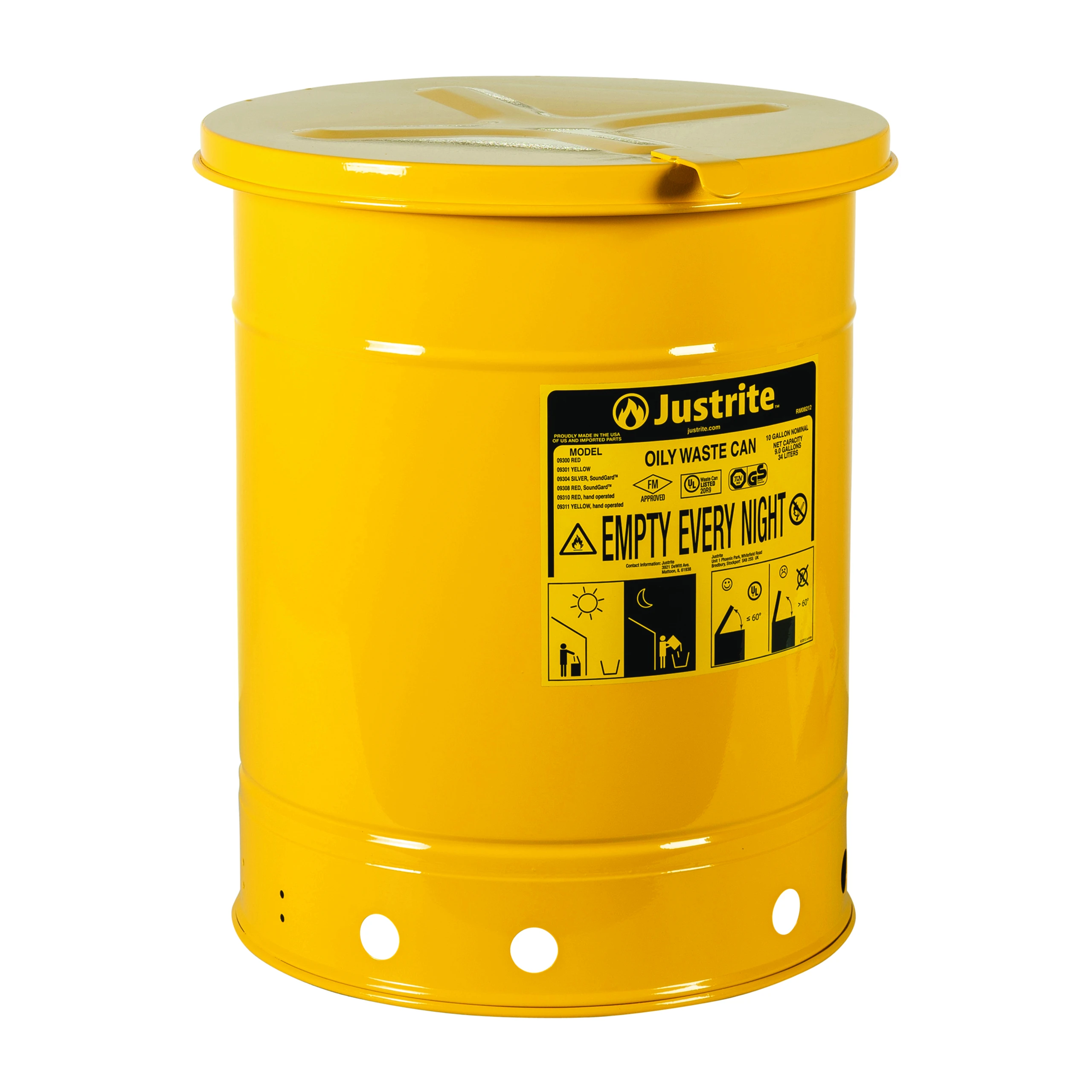
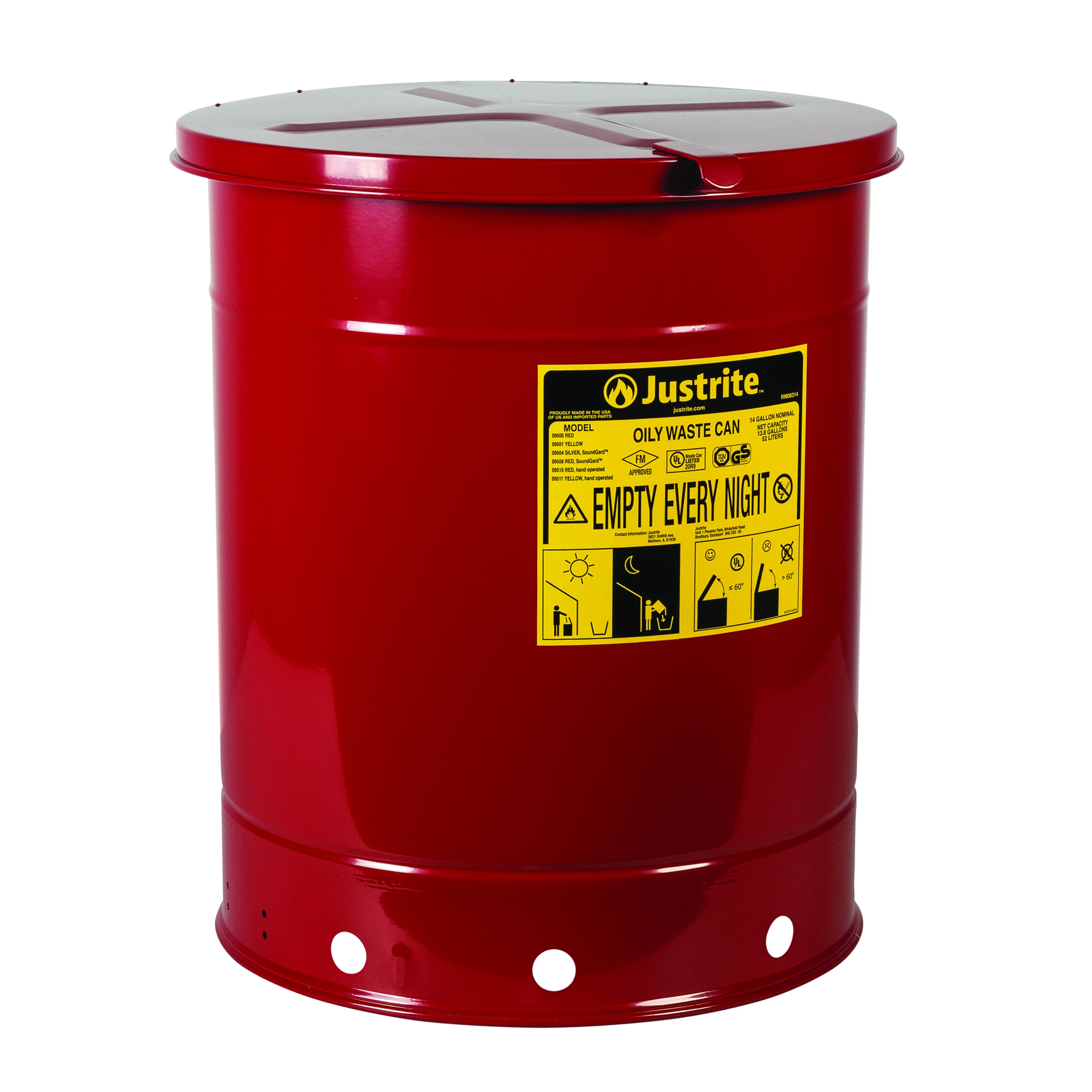
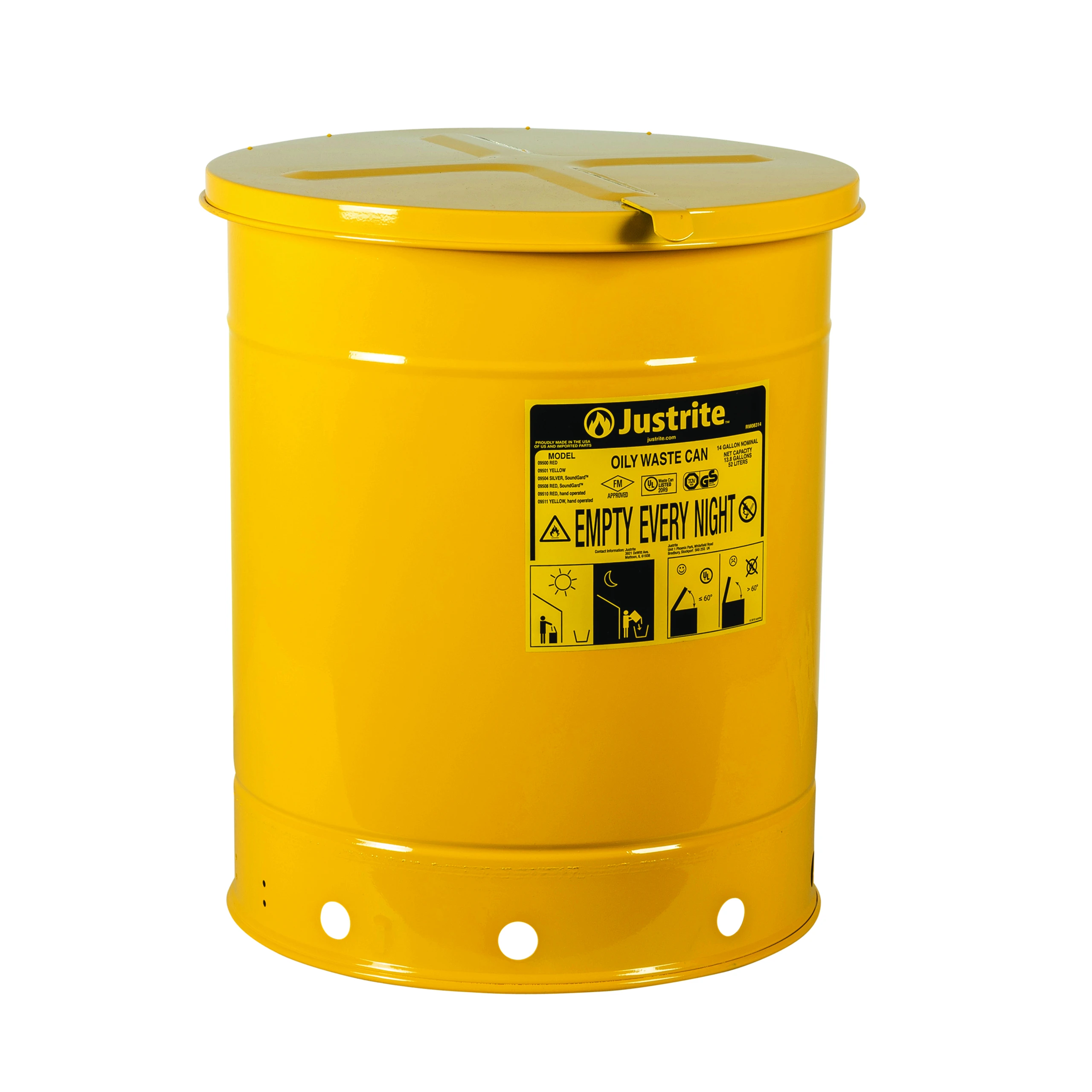
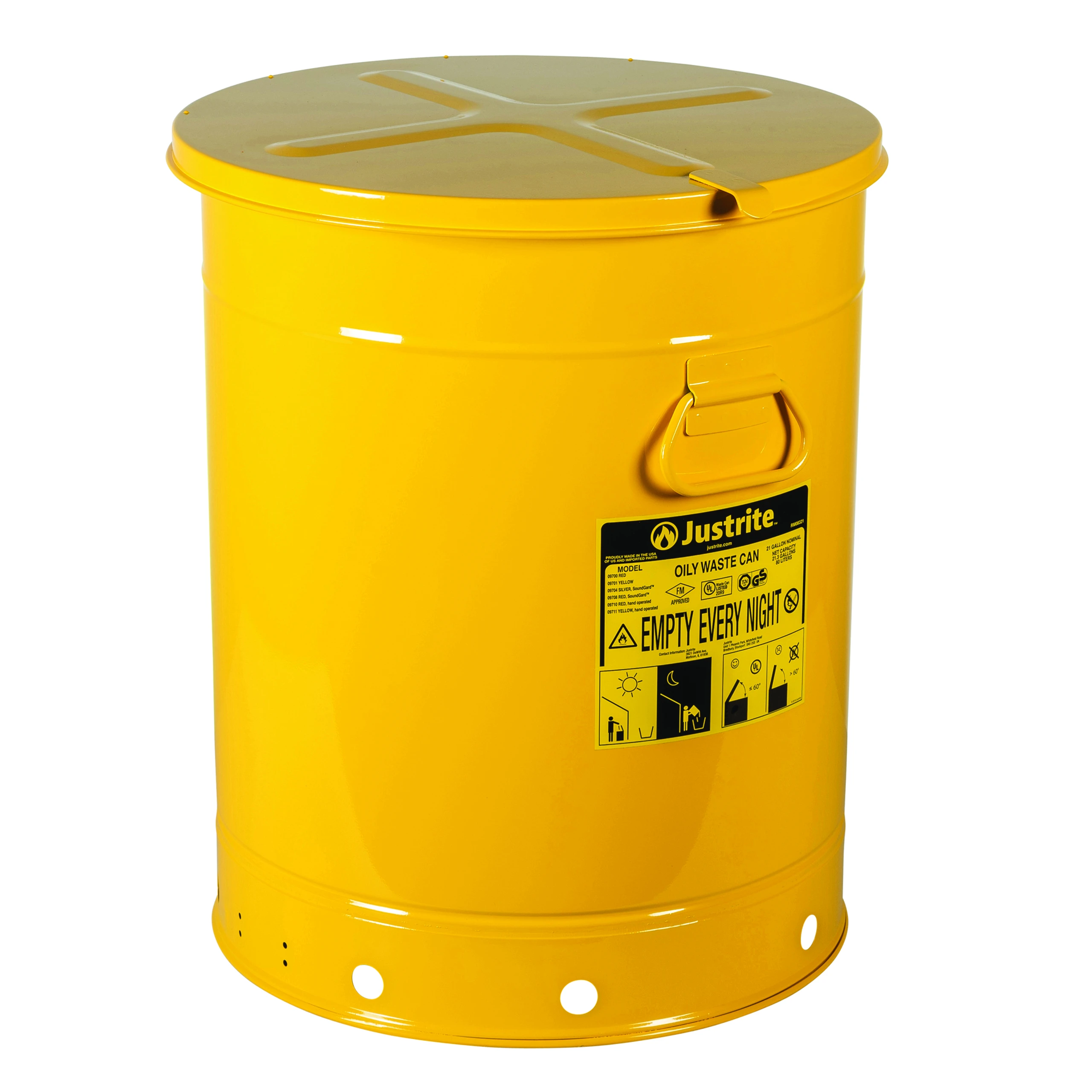
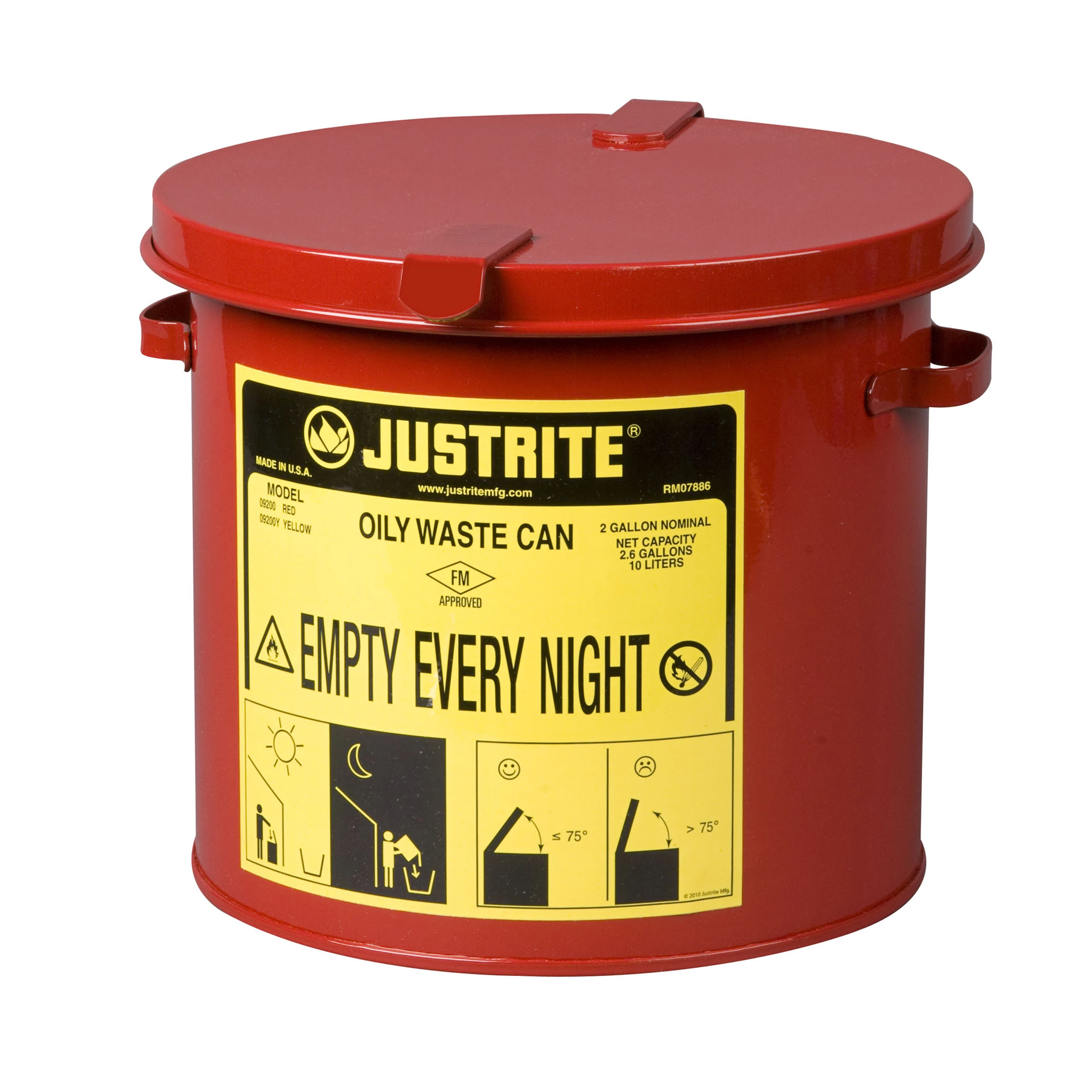
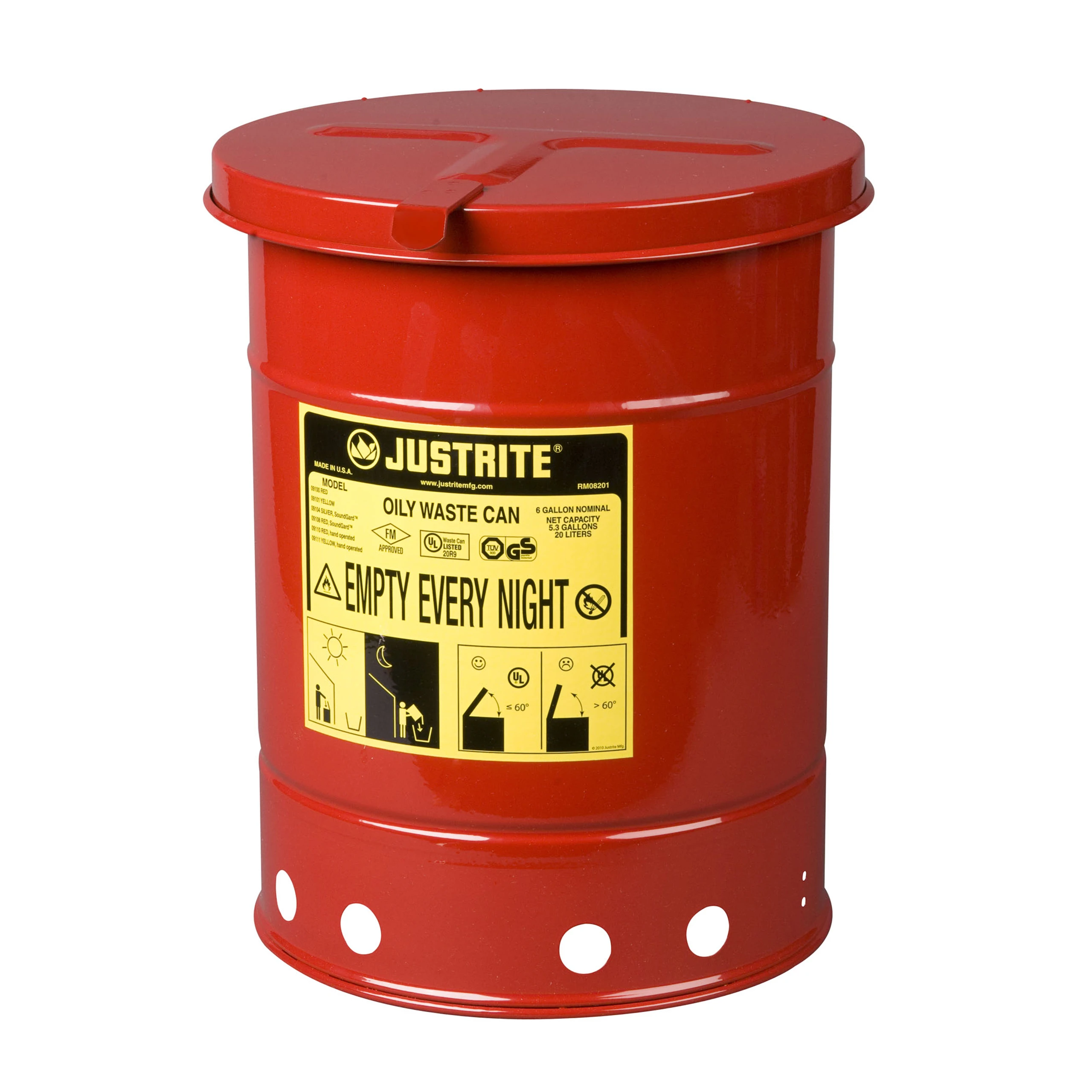
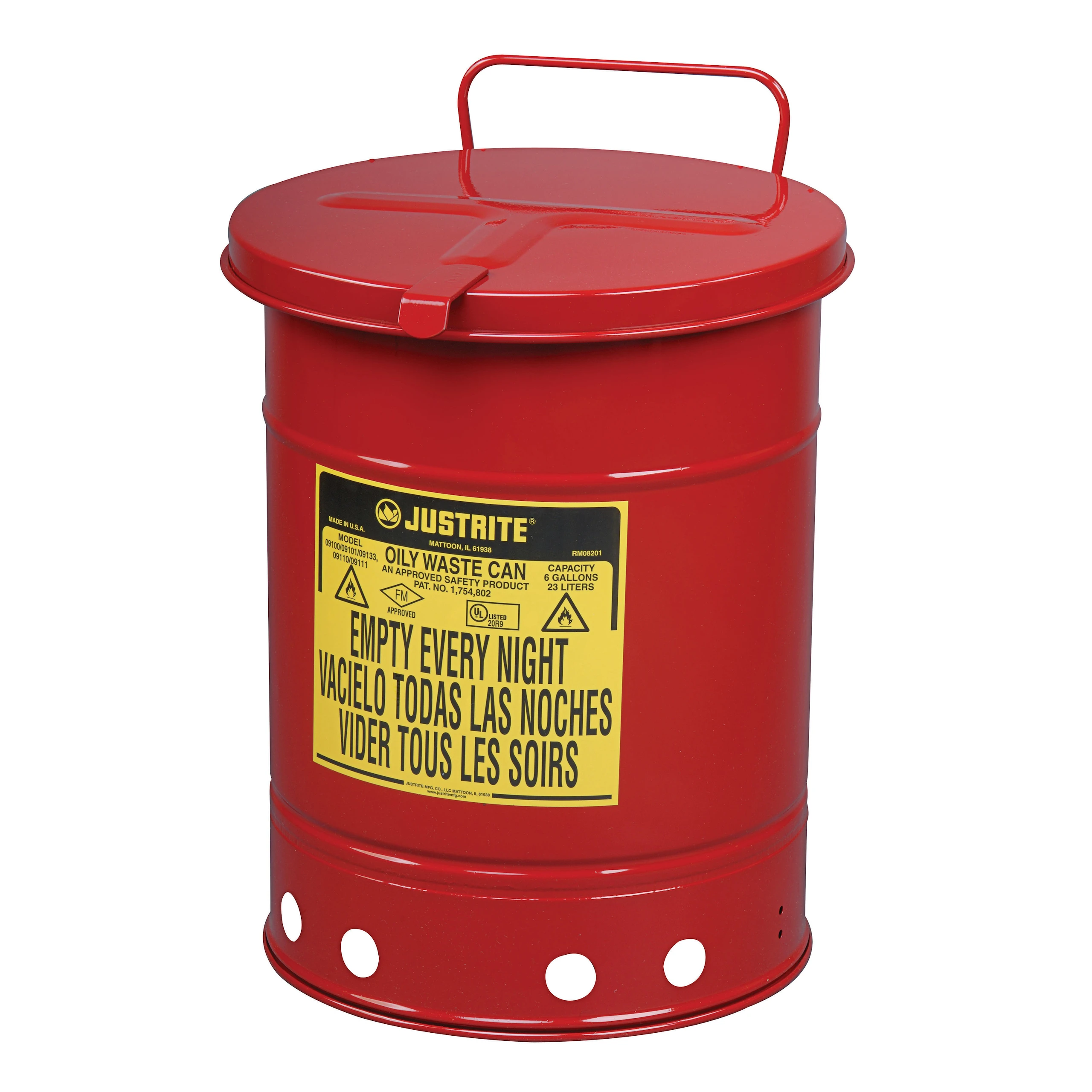
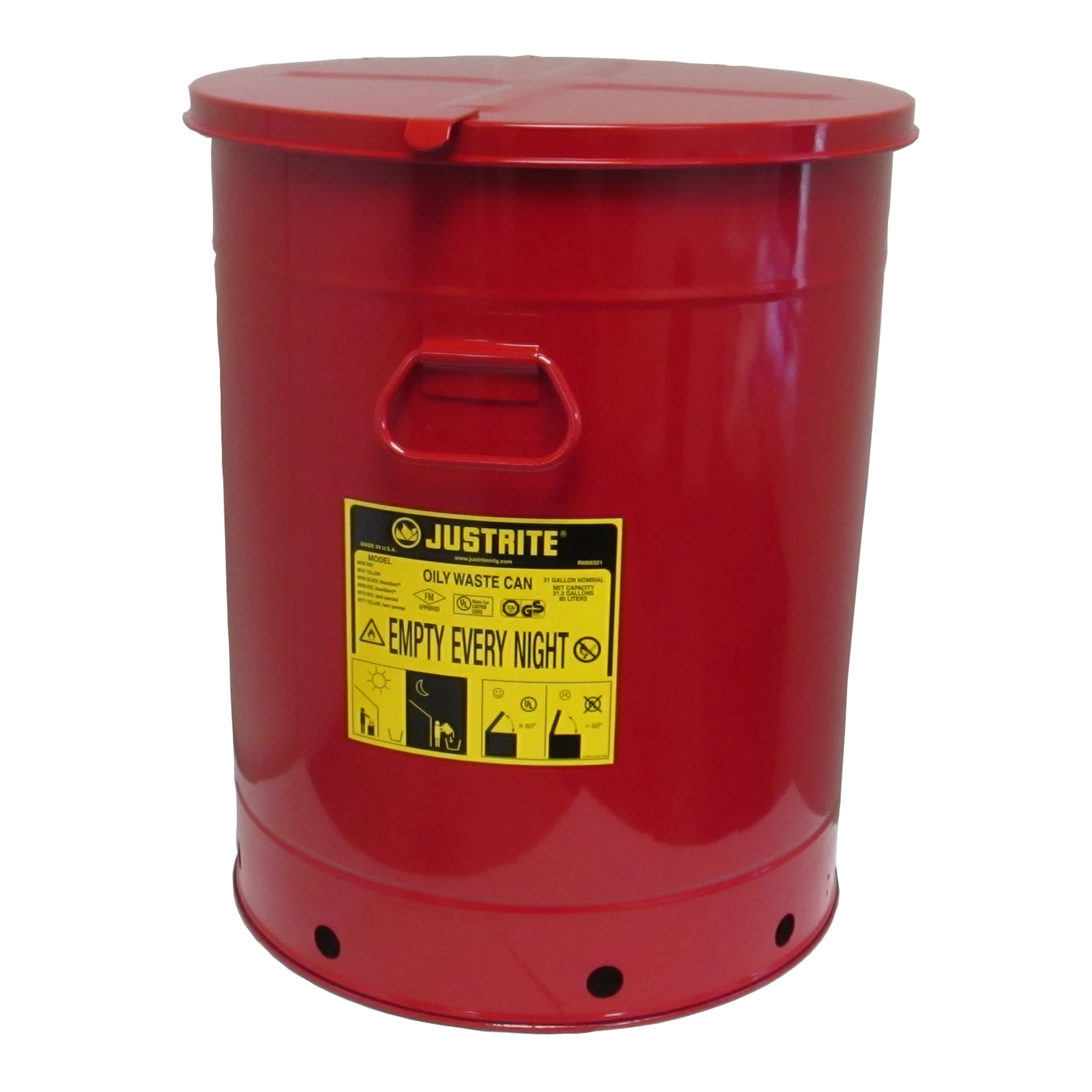
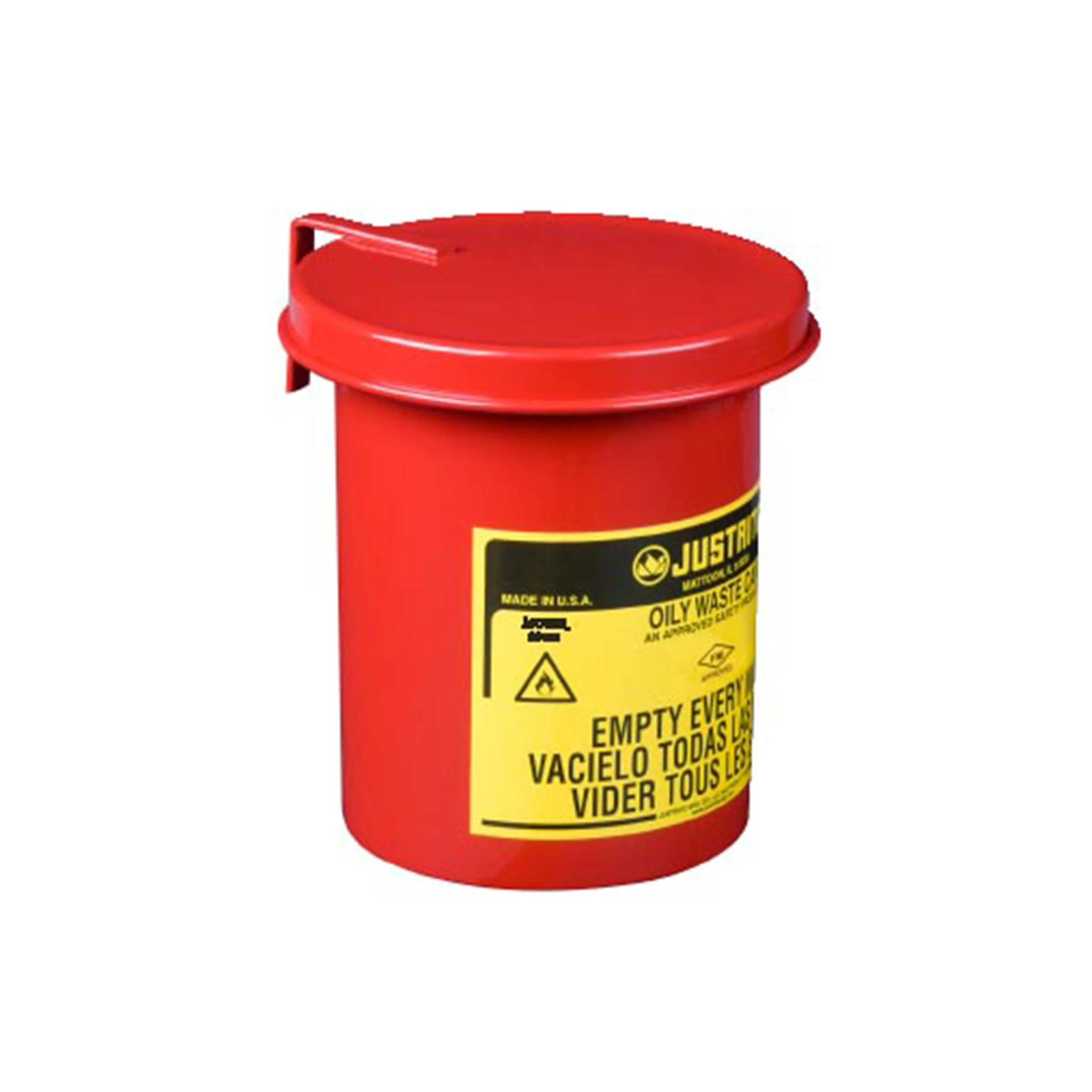
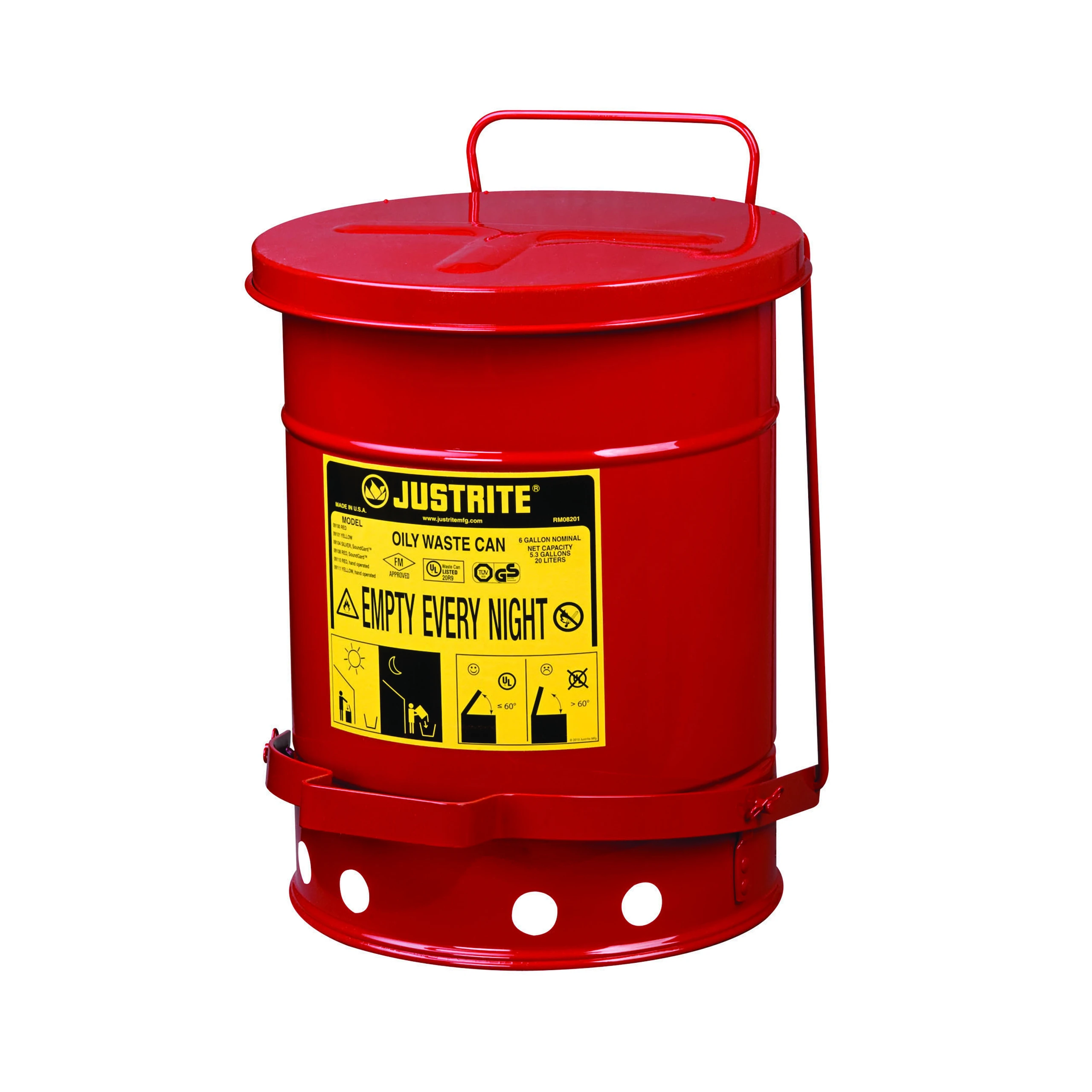
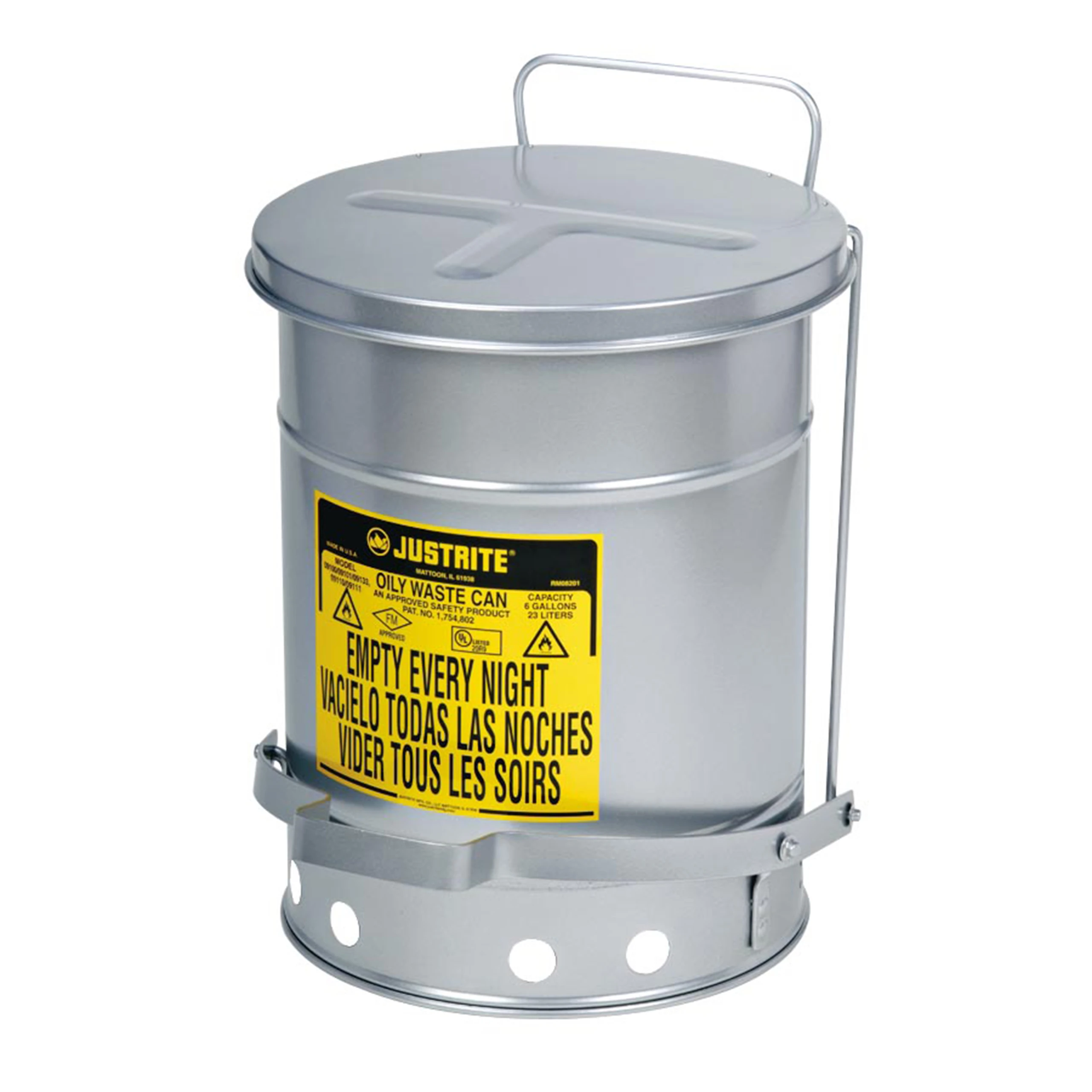
Store potentially flammable material, such as rags and cloths soaked in solvents, thinners, linseed oil, combustible adhesives and other flammable liquids. Feature a foot- or hand-operated lid that opens up to a restricted angle for minimising the risk of combustion
Justrite oily waste cans store potentially flammable material, such as rags and cloths soaked in solvents, thinners, linseed oil, combustible adhesives and other flammable liquids. These cans are...Read more
JUSTRITE -
Oily Waste Cans, Hand Operated
JUSTRITE -
SoundGard Series Oily Waste Cans, Hands-Free
JUSTRITE -
Oily Waste Cans, Hands-Free
Features
- They have a foot / hand-operated lid that opens up to a restricted angle to minimise the risk of combustion.
- These round cans feature an elevated base to permit air circulation around the can for dispersing heat and minimising moisture build-up & rusting.
- They have steel construction for structural rigidity and powder-coated finish for chemical resistance.
- These oily waste cans come with lids that open up to 60 degrees and stay closed when unused.
- They are available in bright red and yellow colours with warning labels for high visibility, even from a far distance.
Frequently Asked Questions
What safety precautions should be taken while using Justrite oily waste cans?
- Ensure compatibility of waste with Justrite oily waste can materials.
- Clearly label the can to indicate its contents.
- Dispose of only oily rags and compatible flammable materials.
- Prohibit smoking and keep away from ignition sources.
- Maintain a well-ventilated storage area for the can.
- Store away from heat sources to prevent combustion.
- Regularly inspect for damage, leaks or deterioration.
- Follow proper waste disposal regulations and guidelines.
- Keep fire safety equipment nearby.
- Provide training on handling and disposal procedures.
How do I clean and maintain these oily waste cans?
- Empty the can and ensure it is free from flammable materials.
- Inspect the can for residue and clean off excess oil or debris.
- Prepare a mild detergent or degreaser solution.
- Scrub the interior surfaces of the can thoroughly.
- Rinse the can with clean water to remove the cleaning solution and debris.
- Allow the can to air dry completely.
- Regularly inspect for damage and replace worn-out parts.
- Follow manufacturer's guidelines for maintenance and replacement parts.
What factors should be considered while choosing oily waste cans?
- Choose cans made from durable and non-reactive materials.
- Look for self-closing lids and flame arrestors.
- Consider the volume of oily waste generated and choose an appropriate size.
- Ensure cans comply with safety standards and regulations.
- Consider available storage space and placement requirements.
- Evaluate ventilation needs for indoor storage.
- Assess ease of cleaning and maintenance.
- Consider manufacturer reputation and customer reviews.
Popular Search Queries
Explore More
- KEYSHAFT
- BABCOCK DAVIS
- DIAMABRUSH
- Specialty Hinges
- File Cabinet and Cam Locks
- Cable Pull Switches
- Oil Gauging Tape Measures
- Heating Cables
- ERIE Motors
- LEESON Hazardous Location Motors
- STREN-FLEX Gorilla Guard Covered Eye Nylon Flat Eye & Eye Web Slings, Type 3
- LEGRIS 3140 Series Y Unions
- BALDWIN FILTERS Groove Gaskets
- CONDOR Hooded Coveralls
- XTEND & CLIMB Platform Stepladder
- H.K. PORTER Center Cut Cutters, Industrial Grade
- OBERON LAN Arc Flash Kits, 40 Cal Arc Rating