


TSUBAKI Plastic Roller Chain
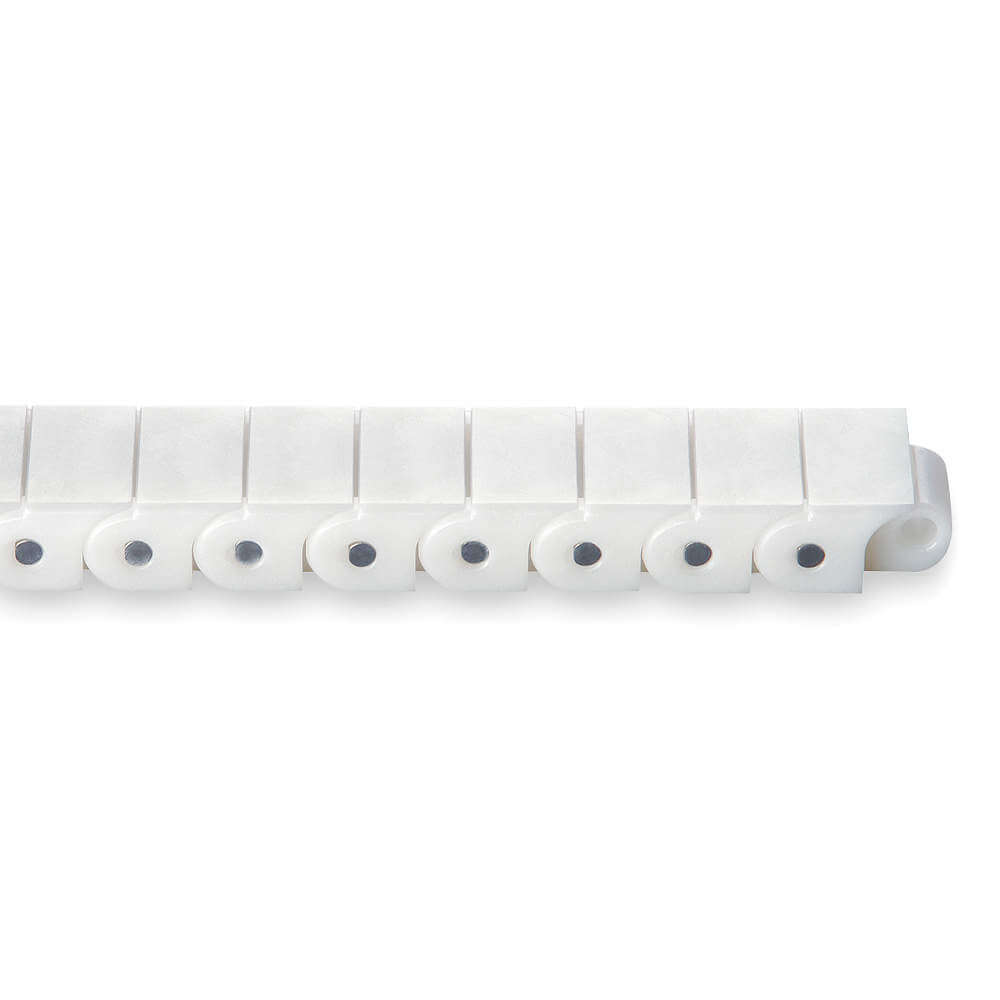
Tsubaki plastic roller chains are used in food processing, packaging and conveying applications for low noise and lubrication-free operation. These plastic roller chains are ideal for bottling and canning products.
Filter
 A
A| Style | Model | Roller Dia. | Size | Overall Width | Pitch | Chain Overall Width | Width Between Roller Link Plates | Plate Height | Chain Number | Price | |
|---|---|---|---|---|---|---|---|---|---|---|---|
| A | 60P | 0.469" | 60P | 1.181" | 3/4" | 1.181" | 1/2" | 0.681" | 60 | €2,593.77 | |
| A | 50P | 2/5" | 50P | 0.886" | 5/8" | 0.886" | 3/8" | 0.591" | 50 | €2,383.42 |
Working Mechanism
- The chain is looped around sprockets or gears.
- As the sprockets rotate, they engage with the chain.
- The rollers on the chain interact with the sprocket teeth.
- This engagement causes the chain to move along the sprockets.
- The connected load or material is conveyed or moved with the chain.
Features
- These plastic roller chains have a breaking strength of 200 lb and a length of 10 feet.
- They are made from plastic for enhanced durability and leakproof operations.
- These chains feature riveted pins with a length of 1.181 inches and roller link plates with a height of 0.681 inches.
- They can operate at temperatures ranging from -4 to 176 degrees F.
- These plastic drive chains offer a tensile strength of 200 lb in a single-strand design.
Frequently Asked Questions
How do I clean and maintain Tsubaki plastic roller chain?
- Inspect regularly for wear, damage or contaminants.
- Clean by removing dirt, debris and excess lubricant.
- Apply approved lubricant sparingly if needed.
- Check tension to prevent chain slack or over-tightening.
- Replace damaged or worn chain components promptly.
- Store in a clean, dry place to prevent corrosion or contamination.
What factors should I consider while choosing a plastic roller chain?
- Understand the specific use and environment.
- Select the right plastic material for chemical resistance.
- Ensure the chain can handle the load.
- Check if it suits your operating temperature.
- Determine if it needs lubrication or is self-lubricating.
- Consider exposure to moisture or chemicals.
- Ensure it matches your sprockets.
When should I replace these plastic roller chains?
- Visible cracks, breakage or damage to chain components.
- Inability to safely support the required load.
- Repeated disruptions in your application.
- Signs of corrosion or chemical deterioration.
- Increased energy consumption due to poor operation.
- When maintenance efforts no longer restore functionality or safety.
We are here to help!
Looking for a part not listed here?
Explore More
- KEYSHAFT
- Hand Knobs and Wheels
- Lubrication Pumps
- Portable Air Tank Conversion Kits
- Vibratory Feeders
- LOC-LINE Bspt Connector
- JOHN GUEST Union Elbows, Acetal Gray
- MUELLER INDUSTRIES 1605-A Chexter Check Valves
- DIVERSIFIED PLASTICS Jersey Barrier, Unrated
- EATON Motor Control Auxiliary Contacts
- MI-T-M Industrial Single Stage Gasoline Air Compressors, 8 Gallon
- ANVIL AS300KO Series Channel With Knock Outs