


EATON ECN33 Class Non-Combination Starters
Eaton ECN33 Class non-combination reversing starters are used to control the operation of electric motors. They have an enclosure for each component and a contactor & a thermal overload relay mounted in separate enclosures.
Filter
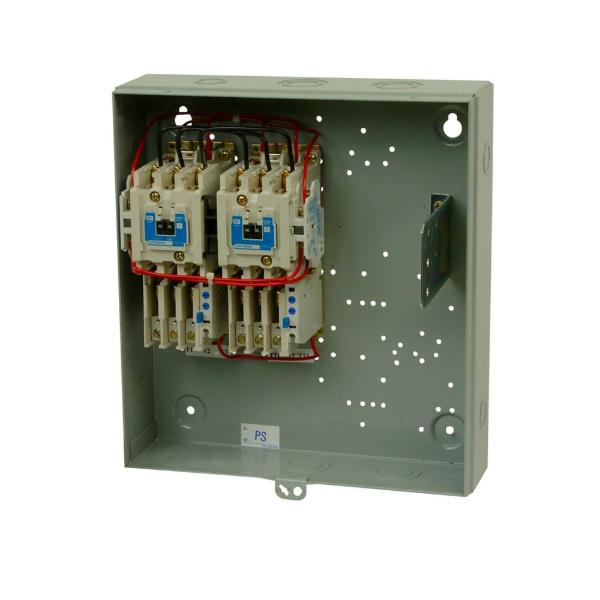 A
A| Style | Model | Frequency | Coil Voltage | Height | Nema Size | Nema Enclosure Rating | Actuator Type | Price | |
|---|---|---|---|---|---|---|---|---|---|
| A | ECN3321CAA | - | - | - | - | - | - | €6,488.42 | |
| A | ECN3301CBA-C1 | - | - | 12 3/5" | NEMA Size 0 | NEMA 1 | FAST/SLOW/STOP pushbuttons | €5,211.02 | |
| A | ECN3311AAA | 50/60 Hz | 10/120V | - | NEMA Size 1 | NEMA 1 | - | €3,635.18 | |
| A | ECN3321AAA | 50/60 Hz | 10/120V | 13.85" | NEMA Size 2 | NEMA 1 | - | €6,454.58 | |
| A | ECN3308AAA | 50/60 Hz | 10/120V | - | NEMA Size 0 | NEMA 12 | - | €4,176.37 | |
| A | ECN3311EEA | 60 Hz | 208V | 13.85" | NEMA Size 1 | NEMA 1 | HIGH/LOW/STOP pushbuttons | €4,836.96 | |
| A | ECN3301EAA | 60 Hz | 208V | 12 3/5" | NEMA Size 0 | NEMA 1 | - | €3,314.84 |
Features
- They can be operated on three-phase AC power with a voltage range from 208 to 600V.
- These starters come with silver-alloy contacts for high current capacity and prolonged service life.
- They are equipped with auxiliary contacts for remote indication of the starter's status and use in control circuits.
Standards and Approvals
- ABS
- cUL
- UL
Frequently Asked Questions
How to install these reversing starters?
- Select a suitable enclosure for the contactor and overload relay based on application requirements and environmental factors.
- Mount the enclosures in a location with appropriate clearances and using proper mounting hardware.
- Wire the three-phase AC power supply to the line terminals on the contactor enclosure following the manufacturer's instructions for wire sizing and termination.
- Wire the motor leads to the load terminals on the contactor enclosure following the manufacturer's instructions for wire sizing and termination.
- Connect the control circuit wires to the auxiliary contacts on the contactor and overload relay enclosures as per the application requirements.
- Test the starter to ensure proper operation and overload protection and troubleshoot any issues.
- Label the starter with appropriate markings to identify the function of each terminal and control device.
How to maintain Eaton ECN33 Class starters?
- Regularly inspect enclosures for damage or wear and repair or replace as needed.
- Clean the starter regularly to remove dirt, dust, and debris.
- Inspect contacts for signs of wear or damage and replace them if necessary.
- Test the overload relay regularly to ensure correct function.
- Lubricate moving parts as per manufacturer's recommendations.
- Check wiring connections regularly to ensure they are tight and secure.
We are here to help!
Looking for a part not listed here?
Popular Search Queries
Explore More
- BESSEY
- BINKS
- GUARDIAN EQUIPMENT
- KEYSHAFT
- LITTLE GIANT PUMPS
- Locking Sanding Discs
- Mud and Paint Mixer Attachments
- Industrial and Commercial Dehumidifiers
- Linear Guide Rails
- Pan Rack Covers
- DESTACO 6004 Series Straight Line Action Clamps
- DESTACO 385-R Series Pull Action Latch Clamps
- ASHCROFT 1188 Low Pressure Bellow Gauges, Brass
- VIBCO VS Series Silent Pneumatic Turbine Vibrators
- KEO Metric Combined Drills And Countersinks, Type A, 60 Degrees Countersink Angle
- WESTWARD Half Round File
- FUJI ELECTRIC 3 Input Phase AC, 480VAC Input Voltage Variable Frequency Drives
- VULCAN HART Grease Can Assembly
- FRIGIDAIRE Seals
- ALTRONIX Maximal V Series Dual Power Supply Access Power Controllers