


Positive Displacement Blowers
Positive displacement blowers are used in wastewater treatment, pneumatic conveying, vacuum systems, food processing and energy production applications to offer a constant flow of air or gas
...Read morePositive Displacement Blowers
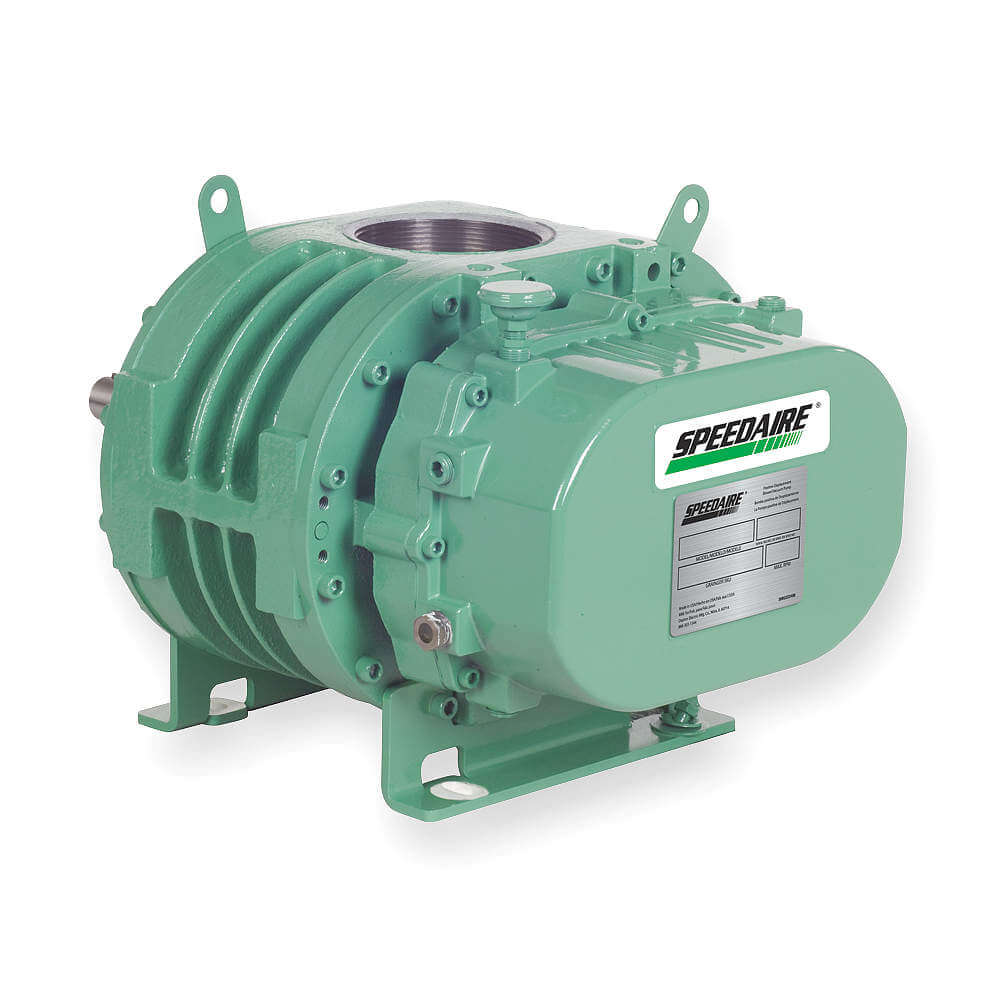
Speedaire blowers / vacuum pumps are used in different industrial applications, such as wastewater treatment, surface cleaning, pneumatic conveying and dairy milking. They feature superior-strength cylinder with heat-dispersing fins. They also have high-temperature seals offering leak-free operation, decreased noise and low vibration levels. Choose from a range of these blowers / vacuum pumps, available in 1.5 and 2.5 Inch FNPT inlet diameters.
Speedaire blowers / vacuum pumps are used in different industrial applications, such as wastewater treatment, surface cleaning, pneumatic conveying and dairy milking. They feature superior-strength cylinder with heat-dispersing fins. They also have high-temperature seals offering leak-free operation, decreased noise and low vibration levels. Choose from a range of these blowers / vacuum pumps, available in 1.5 and 2.5 Inch FNPT inlet diameters.
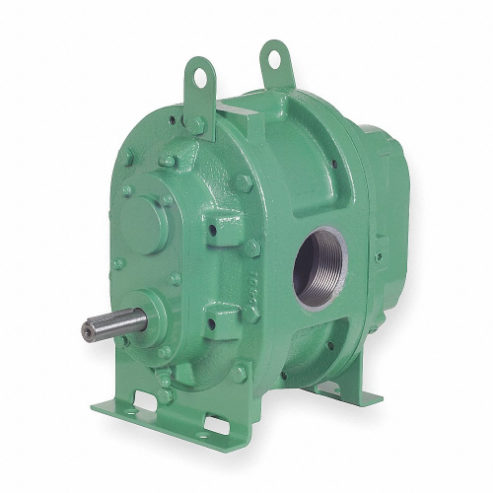 A
A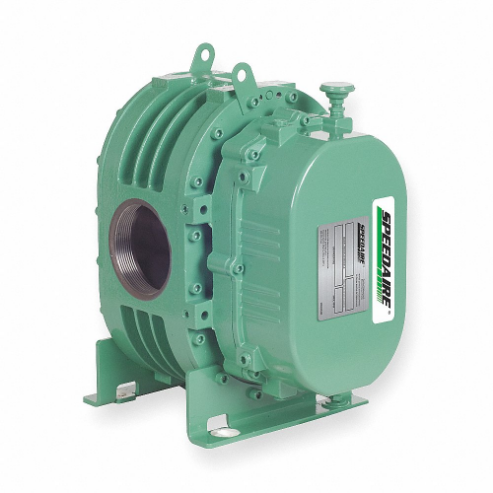 B
B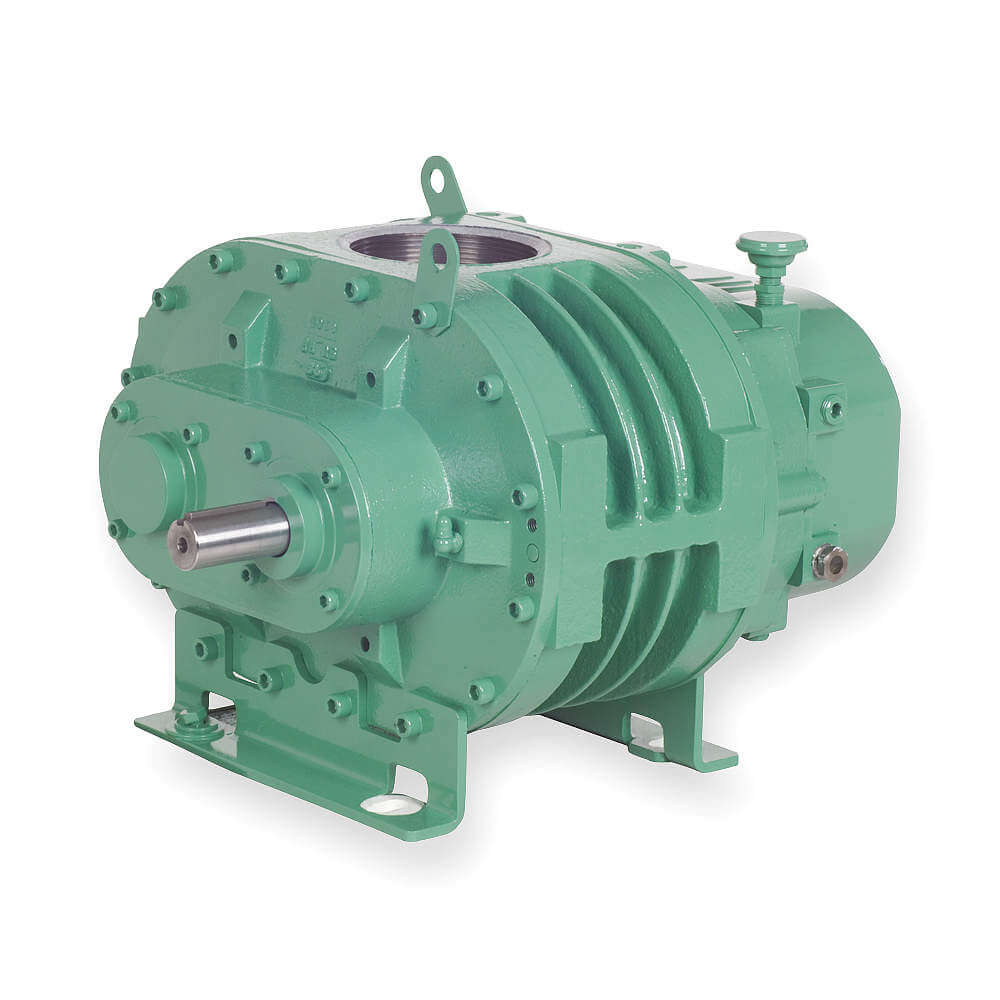 C
C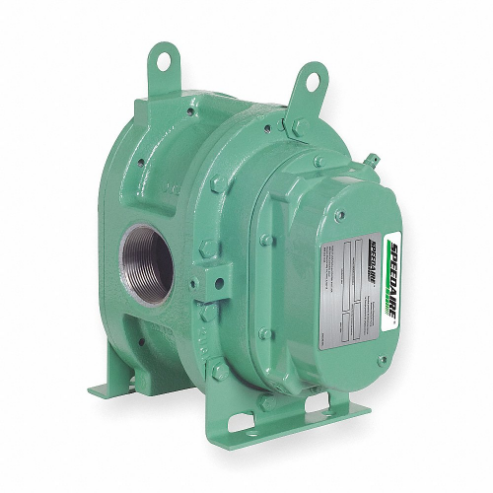 D
D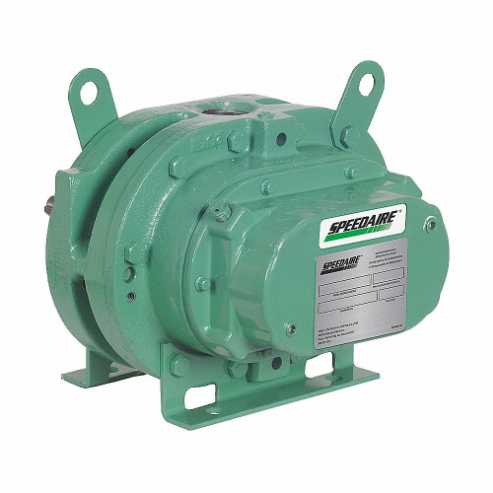 E
E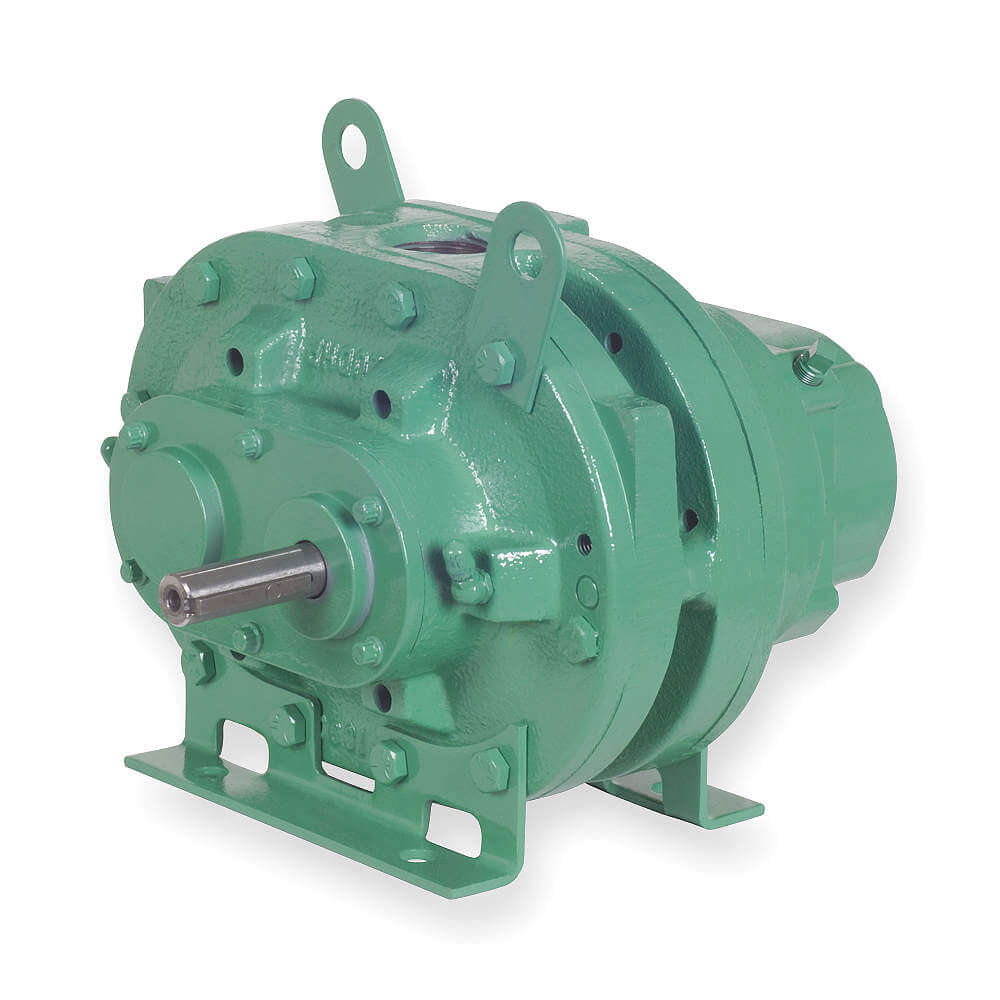 A
ABlower/vacuum Pump 0.35 Cu Ft/rev
| Model | Item | Price (ex. VAT) | |
|---|---|---|---|
| 2EPR9 | AB9QKF | €9,382.69 |
Blower/Vacuum Pump 0.14 cubic feet/Rev
| Model | Item | Price (ex. VAT) | |
|---|---|---|---|
| 2EPT2 | AH2NRY | €7,066.35 |
Working Mechanism
- The blower is powered by an electric motor or an engine, which drives a pair of rotors or lobes that rotate in opposite directions within a housing.
- As the lobes rotate, they create a sealed chamber between themselves and the housing. The volume of this chamber decreases as the lobes move towards the outlet, causing the air or gas to be compressed.
- At the outlet side of the blower, the compressed air or gas is discharged into the system. The volume of the chamber increases as the lobes move towards the inlet, creating a low-pressure area that allows more air or gas to enter the blower.
- The cycle keeps repeating and the lobes keep trapping & compressing a fixed volume of air or gas and releasing it at the outlet.
Frequently Asked Questions
Can Speedaire positive displacement blowers be used in hazardous environments?
Yes, Speedaire positive displacement blowers can be designed and manufactured for use in hazardous environments. They can be constructed with explosion-proof motors and other safety features to comply with industry standards and regulations.
How do I maintain these displacement blowers?
- Regularly inspect and clean the inlet and outlet ports to prevent debris or contaminants from entering the blower.
- Check the drive belt or coupling for wear and adjust the tension or alignment as needed.
- Inspect the seals for leaks and replace them if necessary.
- Change the oil or lubrication as recommended by the manufacturer. The frequency of oil changes will depend on operating conditions and usage.
- Inspect the cooling system, if applicable and clean the heat exchangers or radiators to ensure proper cooling.
- Monitor the temperature and vibration levels of the blower and address any abnormal readings promptly.
- Keep a log of maintenance activities and inspections to track the blower's performance and identify any potential issues.
How do I install these displacement blowers?
- Determine the location for the blower. It should be installed in a well-ventilated area with adequate space for maintenance and inspection.
- Ensure that the foundation or mounting surface is level and can support the weight of the blower.
- Connect the inlet and outlet ports of the blower to the piping system using appropriate fittings and connections. It is important to use the correct size and type of piping to prevent pressure drops and ensure optimal performance.
- Install the motor or engine that will power the blower. Make sure it is properly aligned and securely mounted to prevent vibration and excessive wear.
- Check and adjust the belt tension or coupling alignment, if applicable, to ensure smooth operation.
- Fill the blower with the recommended type and amount of lubrication.
- Test the blower, ensuring it operates within the specified parameters.
- Install any necessary accessories or controls, such as filters, silencers or pressure gauges, according to the manufacturer's instructions.
- Label the blower with its model number, operating specifications and maintenance requirements for future reference.
Popular Search Queries
Explore More
- PRO1 IAQ
- ENDRESS HAUSER
- HETTICH
- KEYSHAFT
- Pendant Control Stations
- Tachometer Sensors
- Putty/Joint Knives Spatulas Scrapers
- Raceway Fitting Accessories
- Key Cabinets and Replacement Tags
- ALBION CASTERS Track Wheel Plate Casters
- ZURN Adapters
- 3M TSM, Locking Sanding Disc
- PLAST-O-MATIC GGMU Series Gauge Guards, PVDF, FKM Seal, 0-160 PSI Gauge Size
- RHEEM Burners
- TEMPCO CRT Series E-Mitters
- MEMPHIS GLOVE NXG Gray Nylon Work Gloves
- AKRO-MILS 30014 Shelfmax Shelf Bins
- ASSOCIATED SPRING RAYMOND TU 7500 Gas Springs
- MUELLER INDUSTRIES 1601-AC Chexter Check Valves